

How Do I Stop Cold Air From Coming Through Electrical Outlets and Switch Plates?

Water Heater Failure: Signs, Causes & Emergency Solutions in West Long Branch NJ
November 26, 2025
How Can I Hang Christmas Decorations Without Damaging Walls, Trim, or Paint?
December 12, 2025
Key Takeaways:
- Cold air leaks through outlets on exterior walls due to gaps in insulation behind the electrical boxes
- Foam outlet insulation pads are an easy, inexpensive DIY solution costing under $10
- Turn off power at the breaker before removing any outlet covers for safety
- Seal larger gaps with fire-rated caulk or expanding foam designed for electrical boxes
- Childproof outlet covers can reduce drafts on unused outlets while keeping kids safe
- Professional draft sealing addresses hidden wall cavities and insulation gaps you can’t reach
- Combining outlet fixes with whole-home winterization can significantly reduce heating costs
Introduction
You’re sitting on your couch on a cold January evening in West Long Branch, NJ, and you feel a chilly breeze. You check the windows. They’re closed tight. The door’s shut. Where’s that draft coming from?
The answer might surprise you. Those innocent-looking electrical outlets and light switches on your exterior walls are secretly letting winter air pour into your home. This isn’t just uncomfortable. It’s costing you money every time your heating system runs.
Trusty Monmouth County Handyman has sealed hundreds of drafty outlets across Monmouth County. We know exactly where to look and how to fix it properly. Here’s everything you need to know about stopping those sneaky cold air outlets from turning your home into an icebox.
Why Do Electrical Outlets Let Cold Air In?
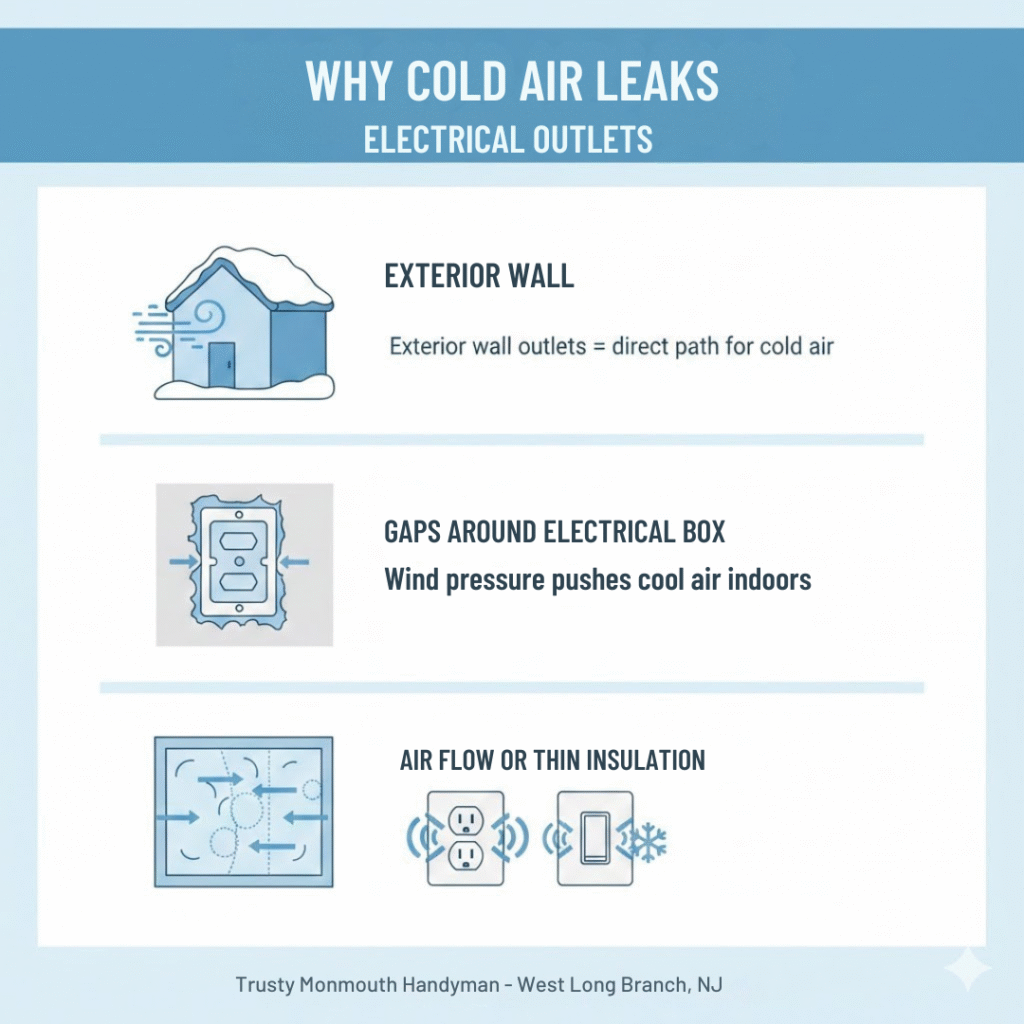
Your electrical outlets aren’t airtight. They’re actually little holes straight through your wall.
When electricians install outlets, they cut openings in your drywall and exterior sheathing. The electrical box sits in that opening. Behind it? Often just a thin layer of insulation or sometimes nothing at all. Cold outside air travels through gaps around the box, through the box itself, and right out through the thin plastic cover plate.
Older homes in areas like Long Branch and Deal have it worse. Many were built before modern insulation standards. The wall cavities behind those outlets might have minimal insulation. Some have none at all.
The problem gets worse on windy days. Coastal Monmouth County homes face steady ocean breezes. That wind creates pressure differences that push cold air through every tiny crack and gap it can find. Your outlets are easy targets.
What Are Outlet Insulation Pads and Do They Work?
Outlet insulation pads are thin foam gaskets that fit behind your outlet and switch plate covers. They cost about $5-10 for a pack that covers 10-20 outlets.
These pads work surprisingly well for such a simple solution. They create an air seal between the electrical box and the cover plate. This blocks the direct path cold air takes from inside your wall into your room.
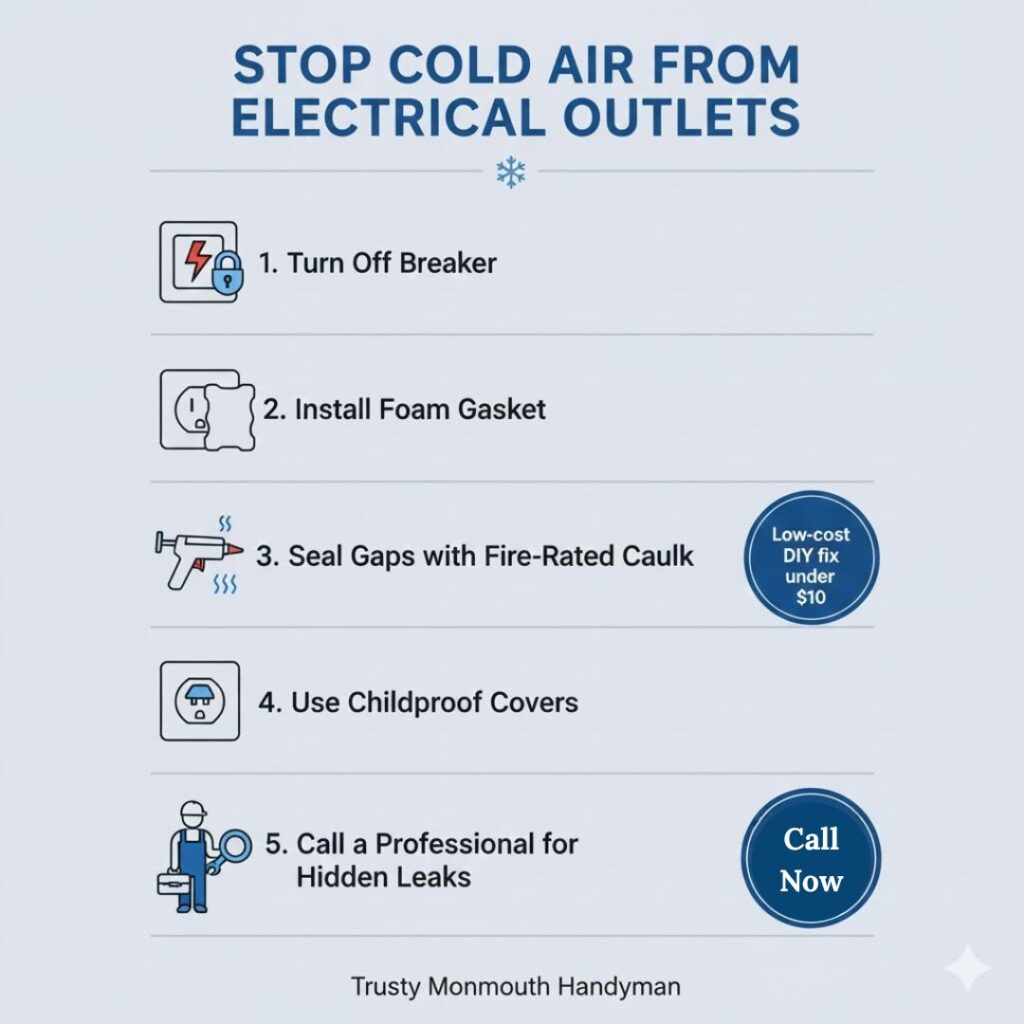
Installation takes about 30 seconds per outlet. Turn off the power. Remove the cover plate screw. Place the foam pad over the outlet. Replace the cover plate. Done.
The catch? They only work if the main problem is air leaking around the outlet opening itself. If you have bigger gaps in the wall cavity or around the electrical box, you’ll need more comprehensive fixes.
How Do I Install Outlet Insulation Pads Safely?
Safety first. Always turn off power at the breaker box before touching any electrical outlet.
Remove the cover plate by unscrewing the single screw in the center. Keep track of that tiny screw. You’ll need it again in 30 seconds.
Look at the foam pad. It has pre-cut holes for the outlet or switch. Line those holes up with your electrical device. The pad should fit flat against the wall.
Press the foam pad against the wall. Replace the cover plate over the pad. Screw it back in place. Don’t overtighten. You want it snug, not crushed.
Turn the power back on. Test the outlet to make sure everything still works properly.
Do this for every outlet and switch on exterior walls. Pay special attention to outlets in bedrooms, living rooms, and anywhere you feel winter drafts in your home.
What Other Methods Stop Drafts From Outlets?
Childproof outlet covers work double duty. They keep kids safe and block air flow through unused outlets. The solid plastic caps create a barrier over the outlet openings.
Fire-rated caulk seals gaps around the electrical box itself. Remove the cover plate. Apply a bead of caulk where the box meets the drywall. This stops air from traveling around the outside of the box. Make sure you use fire-rated caulk. Regular caulk isn’t safe around electrical components.
Spray foam designed for electrical boxes fills larger gaps in the wall cavity. This requires more care. You need the right product. Standard spray foam is flammable and violates code around electrical. Look for foam specifically labeled as fire-resistant and safe for electrical applications.
For severe draft problems, you might need to add insulation inside the wall cavity itself. This involves removing the outlet, insulating behind and around the electrical box, then reinstalling everything properly. This is where most homeowners call a handyman for professional help.
Our team at Trusty Monmouth County Handyman handles this kind of handyman draft sealing regularly. We know how to insulate around electrical safely and to code.
When Should I Call a Professional for Outlet Draft Sealing?
Call a pro if you’re not comfortable working around electricity. Even with the breaker off, mistakes happen. A licensed handyman knows how to work safely.
Multiple drafty outlets often signal bigger insulation problems. If half the outlets in your home are leaking cold air, you probably have inadequate wall insulation. A comprehensive inspection can identify all the problem areas at once.
Older homes in Eatontown and Red Bank sometimes have outdated wiring or improper electrical boxes. Modern code requires specific box types in exterior walls. If your boxes don’t meet current standards, this is the perfect time to upgrade.
You feel drafts even after installing foam pads? There are hidden gaps somewhere. Professional draft sealing includes thermal imaging to find every air leak. We can see exactly where cold air enters, even inside your walls.
Combining outlet sealing with other winterization tasks makes sense. We can seal outlets, weatherstrip doors, insulate attics, and handle all your home repair issues in one visit. It’s more efficient and more effective.
Does Sealing Outlets Really Save Money on Heating?
Yes. Air leaks are responsible for significant energy waste in homes.
Think about it this way. Your heating system warms your indoor air. That warm air leaks out through gaps around outlets, windows, doors, and other openings. Cold air rushes in to replace it. Your heater runs constantly trying to warm that incoming cold air.
Sealing outlets is one piece of a larger weatherization strategy. Combined with proper window sealing, door weatherstripping, and attic insulation, you can dramatically reduce heating costs.
The foam pads cost almost nothing. If they reduce your heating bill by even $10 a month, they pay for themselves in the first winter. Most homeowners notice the comfort difference immediately. The drafts stop. Rooms feel warmer. The thermostat doesn’t need to work as hard.
For older homes with serious air leakage, professional sealing can cut heating costs by 15-20%. That’s real money back in your pocket every month from November through March here in Monmouth County.
What Mistakes Do People Make Sealing Outlets?
Using regular spray foam around electrical boxes is dangerous. It’s flammable. It violates electrical code. It creates a fire hazard. Always use products specifically rated for electrical applications.
Working on outlets with the power on risks shock. Even if you’re just removing a cover plate, flip that breaker first. It takes 10 seconds and could save your life.
Overtightening cover plate screws crushes the foam pad. This creates gaps where air can still leak through. Snug is enough. You want compression, not destruction.
Forgetting outlets on interior walls that back up to exterior walls is common. Just because an outlet is on your interior bedroom wall doesn’t mean there’s not an exterior wall directly behind it. Those outlets leak just as much cold air.
Ignoring switches is another oversight. Light switches on exterior walls have the same draft problems as outlets. They need foam gaskets too.
Skipping the attic and basement while focusing on outlets misses the bigger picture. Your complete home energy audit should address all air leaks, not just outlets. The biggest leaks are often in your attic access, basement rim joists, and around plumbing penetrations.
How Do Coastal Monmouth County Homes Differ?
Homes in West Long Branch, Oceanport, and other coastal communities face unique challenges. Salt air accelerates deterioration of building materials. The constant ocean breeze creates higher air pressure differences. Winter storms bring wind-driven rain that finds every tiny crack.
Older shore homes often have minimal insulation. Many were built as summer cottages. They were never designed for year-round living in harsh winter conditions.
Humidity from the ocean affects how materials expand and contract. This creates gaps over time. The gap around an electrical box might be small in summer. By January, freeze-thaw cycles have widened it significantly.
Our experience with coastal home repairs means we understand these specific issues. We know which materials hold up to salt air. We know how coastal homes are built. We know where to look for problems.
Can I Do This Project Myself?
Installing foam outlet pads is genuinely DIY-friendly. If you can operate a screwdriver and flip a circuit breaker, you can handle this.
Buy a pack of foam gaskets from any hardware store. Budget an hour or two to do every outlet in your house. Work methodically through each room.
The bigger sealing jobs need more skill. Applying fire-rated caulk around electrical boxes requires knowing what you’re looking at inside that wall. Using spray foam safely needs training and the right products.
Adding insulation behind electrical boxes is advanced work. You’re dealing with electrical components in a confined space. One mistake could create a fire hazard or electrical short.
Know your limits. There’s no shame in calling a professional for the complicated stuff. Our skilled handyman team has 25+ years of experience. We’ve seen every type of outlet draft issue in every style of Monmouth County home.
We handle the tricky parts safely. You get peace of mind knowing it’s done right. And we’re fully insured, so you’re protected if anything unexpected happens.
What Should I Expect From Professional Draft Sealing?
A thorough inspection comes first. We check every outlet and switch. We use thermal imaging to find hidden air leaks. We identify insulation gaps you can’t see.
We explain what we find. You’ll know exactly where your home is losing heat and why. We prioritize fixes based on impact. The biggest leaks get addressed first.
For outlet sealing, we install high-quality foam gaskets on every outlet and switch. We seal around electrical boxes with fire-rated materials. We verify everything is safe and code-compliant.
If we find bigger insulation problems, we discuss options. Sometimes adding insulation from inside makes sense. Other times, exterior work is better. We help you understand the trade-offs.
The whole process is convenient for you. We work around your schedule. We protect your floors and furniture. We clean up completely when we’re done. The job isn’t finished until it exceeds your expectations.
Most outlet sealing jobs take a few hours. Combine it with other home maintenance tasks and we can knock out your whole winter prep list in one visit.
Conclusion
Cold air leaking through electrical outlets is one of those problems you don’t notice until you know to look for it. Once you feel that draft, you can’t unfeel it. The good news? It’s fixable.
Foam outlet insulation pads are an easy first step any homeowner can tackle. For bigger draft problems or homes with serious air leakage, professional sealing makes a real difference in comfort and energy costs.
Don’t let drafty outlets waste your heating dollars all winter. Call (848) 272-9900 or visit Trusty Monmouth County Handyman to schedule your draft sealing service. Our fully insured team serves West Long Branch, NJ and all of Monmouth County with quality workmanship backed by 25+ years of experience.


