Why Investing in Professional Tile Regrouting Saves You Money

Essential Pre-Market Home Repair Services to Boost Buyer Appeal
March 13, 2026
Comprehensive Guide to Custom Carpentry Costs in Monmouth County
March 27, 2026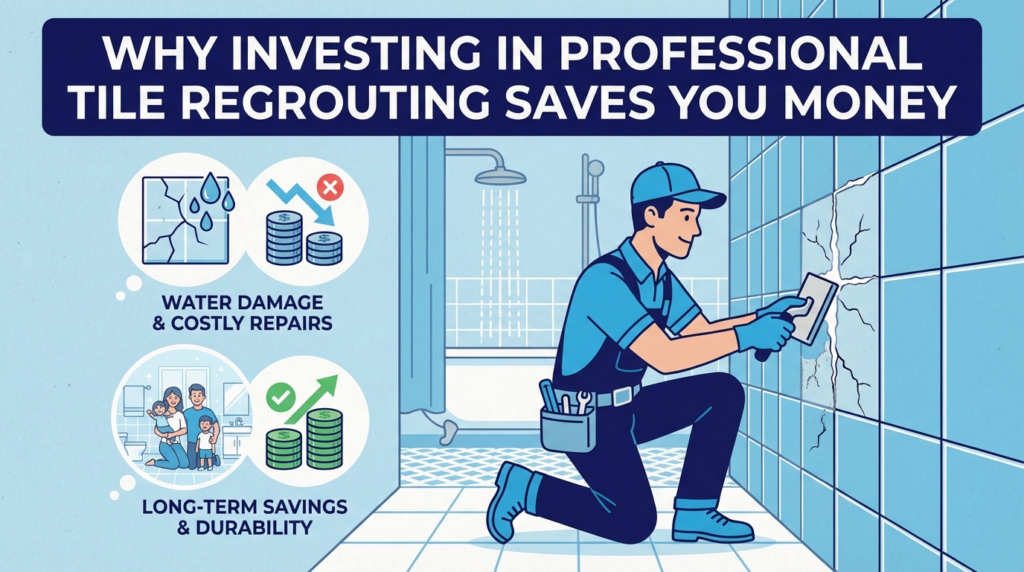
If your bathroom tile looks dingy, discolored, or cracked — but the tiles themselves are in good shape — you might be staring at an expensive solution to a relatively simple problem. Full tile replacement is one of the most disruptive and costly home improvement projects you can undertake. But many homeowners don’t realize there’s a far more affordable option that delivers dramatic results: professional tile regrouting.
Here’s why regrouting is one of the smartest investments you can make in your Monmouth County home.
What Is Tile Regrouting?
Tile regrouting is the process of removing old, damaged, or stained grout from the joints between tiles and replacing it with fresh grout. When done professionally, it completely revitalizes the appearance of your tile surfaces and — more importantly — restores the waterproof seal that protects the structure beneath.
Regrouting is appropriate when:
- Grout is stained and can’t be cleaned
- Grout is cracked, crumbling, or missing in sections
- Grout has changed color due to mold or mildew
- The tile surface looks dated and worn
It is not the right solution when tiles themselves are cracked, broken, or lifting — in those cases, partial or full replacement may be necessary.
The Cost Difference: Regrouting vs. Replacement
This is where the savings become impossible to ignore.
| Service | Cost Range | Notes |
|---|---|---|
| Tile regrouting (shower) | $10–$25 per sq ft | Includes grout removal and new application |
| Tile regrouting (floor) | $6–$8 per sq ft | Standard bathroom floor |
| Tile regrouting (walls) | $5–$6 per sq ft | Bathroom wall tile |
| Full tile replacement (materials only) | $7–$23 per sq ft | Plus $2–$3/sq ft for demo |
| Full shower tile (total) | $2,000–$4,000+ | Labor, materials, and demo combined |
Source: Regrout Tile Costs 2025, Mexican Tile Restoration
A typical shower regrouting project costs a fraction of full tile replacement. According to Angi’s 2026 shower regrouting data, retiling a shower costs an average of $2,620 — more than three times what professional regrouting costs for the same space.
For a standard 80 square foot bathroom floor, professional regrouting runs roughly $480–$640, versus $720–$2,080 just for tile materials on a replacement, before demo and labor are added.
The Hidden Costs of Delayed Regrouting
Failing to regrout damaged or deteriorating grout isn’t “saving money.” It’s accumulating future costs.
Water Damage
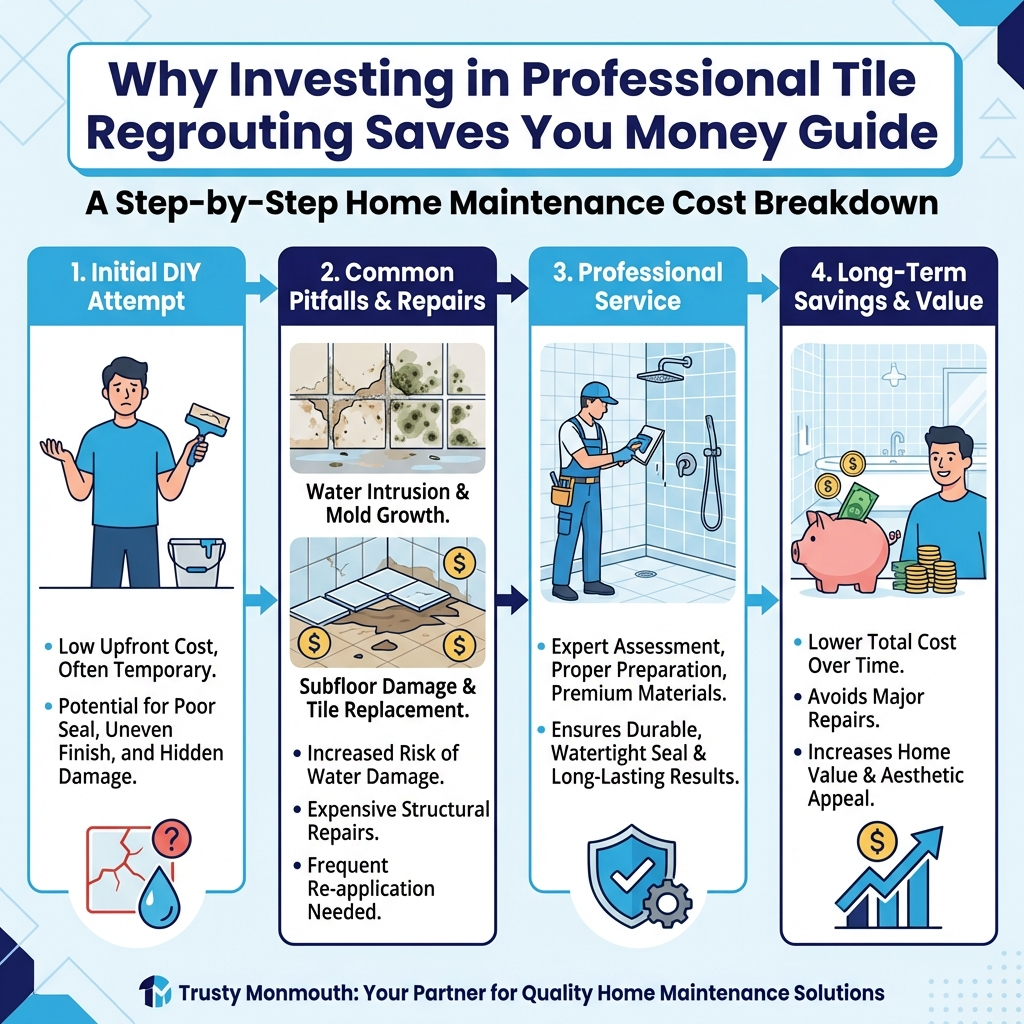
Grout is the waterproof barrier that protects your subfloor, walls, and structural framing from moisture. When grout cracks or crumbles, especially in showers, water infiltrates behind the tile, causing:
- Subfloor rot
- Mold and mildew growth in wall cavities
- Structural damage to framing
- Mold remediation costs ($500–$6,000+)
What begins as a $500 regrouting project can balloon into a $10,000+ mold and water damage restoration if left unaddressed.
Tile Damage
Loose or missing grout allows tiles to shift. When tiles shift, they crack. Cracked tiles require replacement, which costs significantly more than regrouting would have.
Health Risks
Mold thriving in wet, unsealed grout joints poses real health risks, particularly for children, the elderly, and anyone with respiratory conditions. The CDC notes that mold exposure can cause respiratory issues, allergic reactions, and other health problems. Don’t let failing grout become a health hazard in your home.
Why Professional Regrouting Outperforms DIY
Tile regrouting is often sold as a DIY-friendly project, and grout and tools are indeed available at home improvement stores. However, professional regrouting delivers results that DIY rarely matches.
Proper Grout Removal
The critical first step is fully removing old grout without damaging tiles. Professionals use oscillating multi-tools and specialized grout saws to cut cleanly along grout lines. DIYers frequently nick or chip tiles — creating the very damage they were trying to avoid.
Correct Grout Selection
Choosing the wrong type of grout is a common DIY mistake. Sanded grout, unsanded grout, and epoxy grout each have specific applications. Using the wrong type leads to cracking, staining, and premature failure.
Proper Application and Finishing
Grout application requires consistent pressure, correct joint filling, and precise timing for wiping and finishing. Uneven grout lines, smearing, and air pockets — all common in DIY work — compromise both appearance and waterproofing.
Sealing
Professional regrouting includes sealing the finished grout, which dramatically extends its life and resistance to staining and moisture. Many DIYers skip or incorrectly apply this final step.
When to Regrout: Signs to Watch For
Don’t wait until you have visible damage. Regrout when you see:
- Discoloration that won’t clean up — staining that persists after scrubbing indicates compromised grout
- Visible cracks or crumbling — grout that’s breaking apart is no longer waterproof
- Dark spots or fuzzy growth — mold or mildew in grout lines
- Missing grout sections — bare gaps between tiles are an immediate moisture risk
- Grout that’s recessed below tile edges — this allows water to pool along the joint
A professional inspection can confirm whether regrouting is sufficient or if tile replacement is necessary.
Additional Benefits of Fresh Grout
Beyond structural protection, professional regrouting delivers cosmetic benefits that homeowners consistently underestimate:
- Refreshed appearance — new grout can make a 20-year-old tile floor look brand new
- Increased home value — clean, fresh tile is a selling point; stained or cracked grout is a negotiating chip for buyers
- Extended tile life — properly grouted tile can last 20–30 years; neglected grout accelerates the need for full replacement
- Easier cleaning — sealed, fresh grout is far easier to maintain than porous, aged grout
Schedule Professional Tile Regrouting in Monmouth County
At The Trusty Monmouth County Handyman, we provide expert tile regrouting services for bathrooms, kitchens, showers, and floors throughout West Long Branch and Monmouth County. Our team removes damaged grout cleanly, applies the correct grout type for your surface, and seals the finished work for lasting protection.
We’re fully licensed and insured, available 24/7, and offer free estimates on projects over $200.
Don’t wait for water damage to make the decision for you. Call (848) 272-9900 today to schedule your free estimate and find out how professional regrouting can protect and refresh your home for a fraction of the cost of replacement.
Serving West Long Branch and all of Monmouth County, NJ.