
Key Takeaways
- Fixed skylights cost $900 to $2,500 installed and work best in rooms that only need daylight.
- Vented skylights run $1,200 to $3,500 installed and allow passive ventilation, which helps reduce humidity in bathrooms and kitchens.
- Solar-powered vented skylights use a small photovoltaic panel to open and close without wiring, costing $2,000 to $5,000 installed.
- About 30% of a home’s heating energy escapes through windows and skylights. Low-e glass is mandatory in New Jersey.
- Curb-mounted skylights handle coastal wind and rain better than deck-mounted units because the flashing sits above the roof plane.
A skylight transforms a dark hallway or stuffy bathroom into a bright, open space. But a poorly chosen unit turns into a leak, a heat hole, or a maintenance headache. Monmouth County’s coastal climate adds another layer of complexity. Salt air, wind-driven rain, and rapid temperature swings punish any roof penetration that is not flashed correctly. This guide breaks down the three main types of skylights, what they cost, and which one fits your home.
Fixed Skylights: Daylight Without the Moving Parts
A fixed skylight is a sealed glass unit that does not open. It is the simplest, most affordable option. Fixed units work best in rooms where you want natural light but do not need airflow. These include hallways, closets, stairwells, and vaulted living rooms.
Because there are no hinges, seals, or motors, fixed skylights leak less often than vented models. The failure points are reduced to the glass seal and the flashing. That simplicity also means lower cost. A standard fixed skylight in a Monmouth County home runs $900 to $2,500 installed. It depends on size, glass package, and roof pitch.
The downside is zero ventilation. In summer, a fixed skylight can turn a small room into a greenhouse unless you choose the right glass. South-facing fixed units especially need low-e coatings and argon gas fill to block solar heat gain. The Department of Energy warns that 76% of sunlight hitting standard double-pane glass becomes heat. Skylights face the sun directly, so that number matters even more than it does for vertical windows.
Vented Skylights: Light Plus Airflow
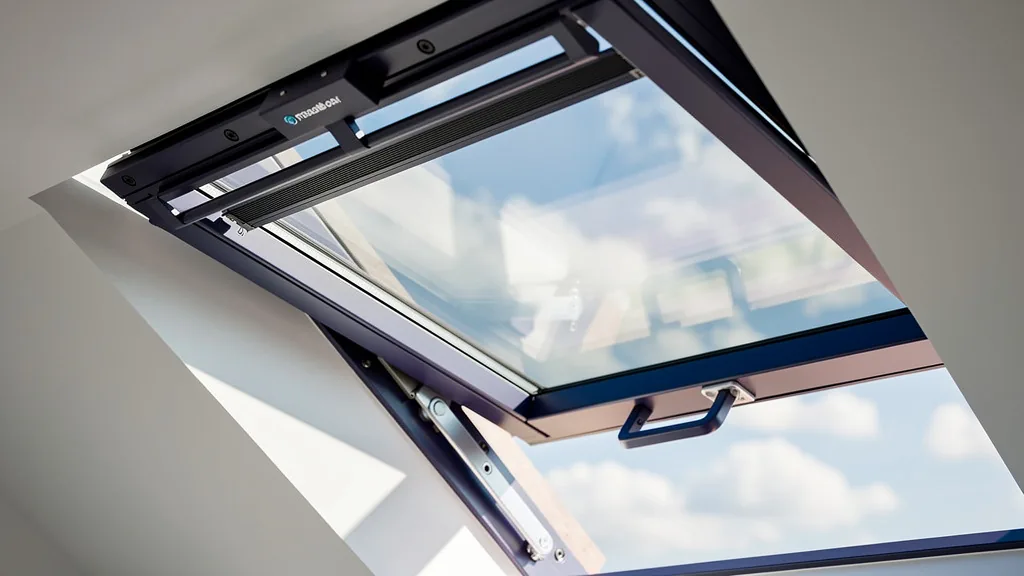
A vented skylight opens manually, electrically, or by solar power. It creates a chimney effect: warm air rises and escapes through the skylight while cooler air enters through the lower windows. That passive ventilation cuts air conditioning costs and removes humidity at the source.
Vented skylights shine in kitchens and bathrooms, where steam and odors build up fast. They also help in upstairs bedrooms that trap heat under the roof. Opening a vented skylight just six inches can drop the perceived temperature in a room by several degrees.
Manual vented units use a crank or pole. They cost less but require you to reach the skylight to operate them. Electric models use a small motor wired to a wall switch or remote. They add $300 to $600 to the base price. Solar-powered vented units have a small photovoltaic panel on the exterior frame. The panel charges an internal battery that runs the motor. No electrician needed. No roof penetrations for wiring.
Installed costs for vented skylights in Monmouth County range from $1,200 to $3,500. The spread is wide because roof access, ceiling type, and shaft construction vary dramatically.
Solar-Powered Skylights: The Best of Both Worlds
A solar-powered vented skylight combines daylight, ventilation, and off-grid operation. The integrated solar panel captures enough energy to open and close the unit dozens of times daily. It works even on overcast Jersey Shore afternoons. Most models include a rain sensor that closes the skylight automatically when moisture hits the glass.
The upfront cost is the highest of the three categories. Expect to pay $2,000 to $5,000 installed, with premium sizes and custom flashing pushing toward the top of that range. But the installation is simpler than hardwired electric. There is no need to run cable from the attic to a wall switch. That saves two to three hours of labor.
Solar-powered units also qualify for the federal Energy Efficient Home Improvement Credit in 2026. They use solar energy to improve the home envelope. Check current IRS guidance for specific limits.
Comparison: Fixed vs. Vented vs. Solar-Powered
| Feature | Fixed | Vented (Manual) | Vented (Solar) |
|---|---|---|---|
| Installed cost | $900–$2,500 | $1,200–$3,000 | $2,000–$5,000 |
| Provides daylight | Yes | Yes | Yes |
| Provides ventilation | No | Yes | Yes |
| Requires wiring | No | No | No |
| Rain sensor | N/A | No | Yes |
| Best room type | Hallways, living rooms | Bathrooms, kitchens | Hard-to-reach ceilings |
| Maintenance needs | Low | Medium | Low |
Curb-Mounted vs. Deck-Mounted: Which Flashes Better?
How the skylight attaches to the roof matters as much as the glass itself.
A curb-mounted skylight sits on a framed box, or curb, that raises the unit above the roof plane. Water runs around the curb, not toward the skylight. The flashing is easier to inspect and repair. In coastal Monmouth County, where wind drives rain uphill, that raised profile is a real advantage. Curb-mounted units are also easier to replace later because the curb stays in place.
A deck-mounted skylight nails directly to the roof deck. It sits lower, giving a sleeker profile. But the flashing must integrate perfectly with the shingles. One misnailed shingle above the head flashing, and water enters. Deck-mounted units cost slightly less because there is no curb to build. For low-slope roofs or areas with heavy wind exposure, curb-mounted is the safer choice.
We have replaced leaking skylights in coastal West Long Branch homes. The original installer used deck-mounted units with inadequate head flashing. Salt air had corroded the fasteners within eight years. A curb-mounted replacement with copper or stainless flashing solved the problem permanently.
The Shaft: The Hidden Cost
A skylight on a vaulted ceiling is simple: the unit sits at the ceiling plane. A skylight on a flat ceiling needs a shaft. This ***framed chase***carries light from the roof to the room below. Shaft construction adds $500 to $2,000 to the project.
The shaft should be flared, wider at the bottom than the top, to bounce more light into the room. Paint the interior white or install a reflective rigid liner. A dark, narrow shaft defeats the purpose. We have seen homeowners spend $3,000 on a skylight only to get a dim rectangle. The shaft was too narrow and painted beige.
If the distance between the roof and the ceiling is more than eight feet, consider a tubular daylighting device instead. These flexible tubes cost $500 to $1,000 installed and work well for closets and laundry rooms. Small bathrooms where a full shaft is impractical.
Glass Options for New Jersey’s Climate
New Jersey’s climate demands a minimum of dual-pane glazing. Single-pane skylights belong in garden sheds, not homes.
Low-e coating is mandatory. It reflects infrared heat while letting visible light through. In winter, low-e keeps warmth inside. In summer, it blocks solar heat. For Monmouth County, specify low-e on both panes, or at a minimum on the interior pane.
Argon gas fill between panes adds insulation. It is standard on most quality units today. Do not pay extra for it, but do not buy a skylight without it.
Tempered glass is required by code for skylights installed within 24 inches of a wall or door. For any unit more than 60 inches above the floor. Tempered glass shatters into small cubes rather than dangerous shards. Laminated glass adds a plastic interlayer that holds the glass together if it breaks. It costs more but offers better security and sound dampening.
Sizing and Placement Rules
A skylight should not exceed 5% to 15% of the room’s floor area. It depends on how many other windows are present. A 100-square-foot bathroom needs roughly 5 to 15 square feet of skylight. Too much south-facing glass overheats the room. Too few leaves it dim.
North-facing skylights provide steady, soft light without much heat gain. South-facing units give the most light but require low-e and possibly exterior shading. East-facing skylights deliver bright morning light. West-facing units bring harsh afternoon sun and heat.
Avoid placing a skylight directly above a bed or seating area unless you add a shade. Even diffused glass can create glare. Most manufacturers offer roller shades, pleated shades, or Venetian blinds designed for their units.
When a Skylight Is Not the Answer
Not every dark room needs a hole in the roof. If your attic is filled with ducts and wires. HVAC equipment, routing a shaft around them may cost more than the skylight itself. If your roof is nearing replacement, install the skylight during the re-roofing, not before. That lets the roofer integrate flashing with new shingles.
If you have a flat or low-slope roof, standard skylights are risky. Water pools on flat surfaces. Use a curb-mounted unit with a built-in slope or consider a solar tube instead.
Homes with cedar shake or slate roofs need custom flashing kits. Standard step flashing designed for asphalt shingles will not conform to irregular surfaces. Factor that costs into your decision.
If you are not sure which skylight fits your home, a quick call gets you a free estimate. You will also get a straight answer. Call or text 848-272-9900 today. We are fully licensed and insured, offer honest upfront pricing, and we are open 24/7.
Frequently Asked Questions
1. Do skylights leak more than regular windows?
Not if they are installed correctly. Most leaks come from failed flashing, not the skylight itself. Curb-mounted units with proper step flashing and an ice-and-water shield membrane rarely leak.
2. Can I install a skylight myself?
A confident DIYer can handle a basic curb-mounted unit on an asphalt shingle roof. Anything involving electrical work, complex flashing, or structural modifications should go to a pro.
3. How long does a skylight last?
The glass seal typically lasts 15 to 20 years. The flashing lasts longer if maintained. Solar-powered motors usually carry 10-year warranties.