

Key Takeaways
- Severe thunderstorms produce hail one inch or larger, and wind gusts over 58 mph. That is per the National Weather Service.
- The New York-New Jersey metro area has more than 878,000 homes at risk for storm surge damage.
- Cleaning gutters and downspouts in spring prevents water from backing up under shingles and into walls.
- Sealing gaps around windows, doors, and utility penetrations cuts energy loss by up to 15% and keeps wind-driven rain out.
- Testing outdoor lighting and GFCI outlets before storm season reduces safety hazards during power outages.
Spring in Monmouth County looks peaceful, but it hides real threats. Warm air collides with lingering cold fronts, spawning severe thunderstorms that can strike with little warning. The National Weather Service defines a severe thunderstorm. It is one capable of producing hail one inch or larger, or wind gusts over 58 mph. Those winds snap branches, rip shingles, and drive rain into gaps you did not know existed. A few weekends of preventive work in April or May can spare you thousands in repairs by July.
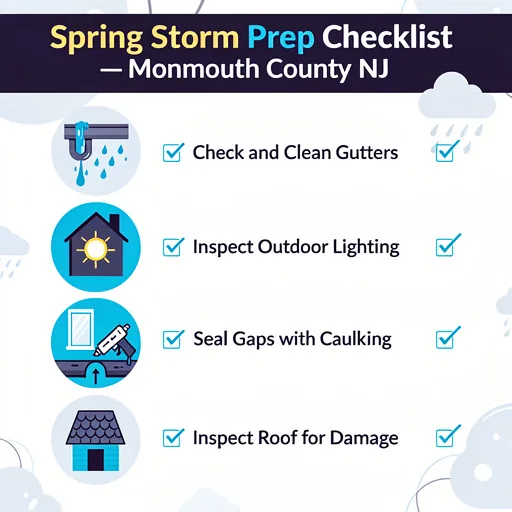
Why Monmouth County Homes Face Unique Spring Risks
Coastal proximity shapes every storm that hits West Long Branch, Red Bank, and the surrounding towns. Wind coming off the Atlantic has nowhere to slow down. Gusts that read 45 mph inland can hit 60 mph at the shore. Salt air accelerates corrosion on metal flashing, fasteners, and outdoor fixtures. That means a roof edge that held fine in Pennsylvania may fail here.
The Insurance Information Institute reports that the New York-New Jersey metro area has 878,226 homes at risk for storm surge. This comes with a reconstruction value above $415 billion. Hurricane Sandy alone caused $30 billion in insured losses when it struck in 2012. While Sandy was a late-season event, the same weaknesses it exposed, rotted soffits, and clogged gutters. Failed seals matter just as much in spring thunderstorms.
Many Monmouth County homes were built before modern wind codes. Raised ranch styles with large overhangs catch the wind like a sail. Cape Cods with knee-wall attics hide leaks for months because the water runs down inside the walls. Knowing your home’s weak points is the first step in protecting it.
Checklist Part 1: Gutters and Downspouts
Clean Every Inch
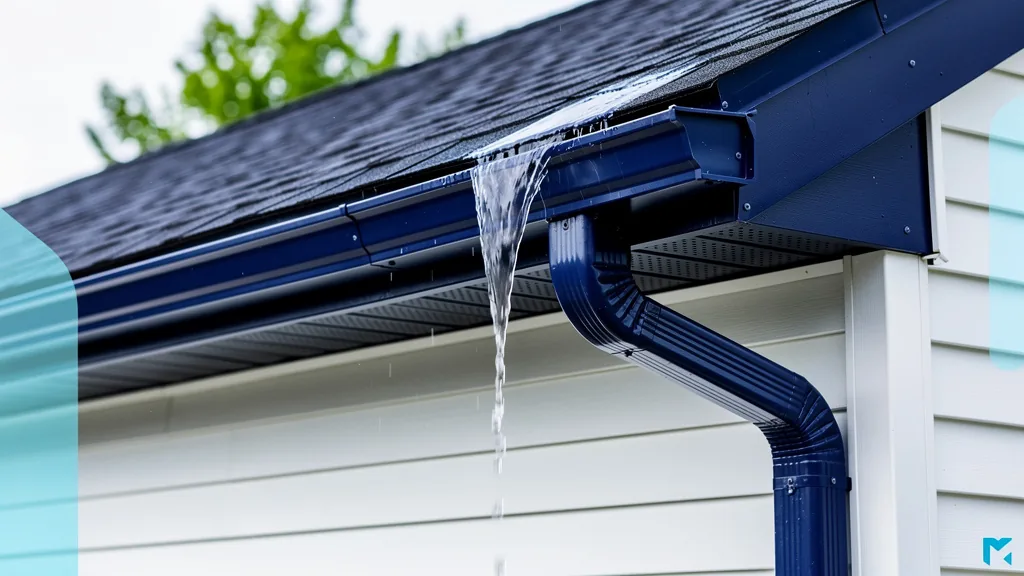
Leaves from last fall compact into sludge over winter. Spring pollen and seed pods add to the mess. When gutters clog, water overflows and rots fascia boards. Worse, it backs up under shingles and into the attic. We have seen ceiling stains in West Long Branch homes that traced back to a single blocked downspout.
Scoop out debris by hand or with a gutter scoop. Flush the system with a garden hose. Check that water exits the downspout freely. If it pools at the base, add an extension to carry water at least six feet from the foundation. For homes with underground drains, test flow with a hose. A crushed or root-clogged drain pipe is invisible until a storm hits.
Inspect Hangers and Pitch
Gutters should slope toward the downspout at roughly one-quarter inch per ten feet. Sagging gutters hold water and pull away from the fascia. Replace broken hangers. Look for rust spots on steel gutters and cracks in vinyl. One-piece aluminum gutters last longer but still dent from ladder impacts.
Check Fascia and Soffits
Peeling paint on fascia boards signals moisture intrusion. Probe with a screwdriver. Soft wood means rot. Soffit vents should be clear of insulation and debris. Blocked soffit vents trap humidity in the attic, which weakens the roof decking over time. In Monmouth County’s humid spring climate, that humidity feeds mold within weeks.
Checklist Part 2: Roof and Flashing
Scan for Missing or Curling Shingles
Binoculars work fine from the ground. Look for tabs that have lifted, cracked, or disappeared entirely. Pay special attention to the south and west faces, where sun and wind do the most damage. Also check valleys, where two roof planes meet. Valleys channel the most water and fail first if flashing is compromised.
Inspect Pipe Boots and Chimney Flashing
Rubber pipe boots around plumbing vents crack after five to eight years in the sun. A $15 boot failure can cause $2,000 in ceiling damage. Chimney flashing should form a tight seal where the masonry meets the roof. Look for gaps, rust, or caulking that has pulled away. Re-seal with high-quality urethane caulk rated for roofing.
Trim Overhanging Branches
Tree limbs within ten feet of the roof are liabilities. Wind whips them against shingles. Heavy rain weighs them down until they snap. Spring is the right time to trim. Trees have not yet leafed out fully, so you can see the branch structure. Hire a certified arborist for large limbs near power lines.
DIY vs. Pro: Spring Storm Prep Task Guide
| Task | When to DIY | When to Call a Pro | Estimated Pro Cost |
|---|---|---|---|
| Roof inspection | Never — safety risk | Always | $150–$300 |
| Gutter cleaning | 1-story homes only | 2+ stories | $100–$250 |
| Tree limb removal | Small branches under 10 ft | Near power lines or roof | $200–$1,000+ |
| Sump pump test | Yes | Near power lines or the roof | $150–$400 to replace |
| Window/door sealing | Yes | Rotted frames | $200–$600 |
| Generator service | Yes (basic) | Fuel system issues | $75–$200 |
Checklist Part 3: Sealing Windows, Doors, and Penetrations
Caulk Exterior Gaps
The Department of Energy recommends air sealing as the first step before adding insulation. It is also your first defense against wind-driven rain. Check caulk lines around window frames, door jambs, hose bibs, dryer vents, and cable penetrations. Old caulk becomes brittle and pulls away from the siding.
Cut out failed caulk with a utility knife. Clean the joint with a wire brush. Apply fresh exterior-grade silicone or polyurethane caulk in a smooth bead. Tool it with a wet finger or a rounded sponge for full contact. One tube covers about 50 linear feet. A typical home needs four to eight tubes.
Replace Weatherstripping
Doors and operable windows need compressible weatherstripping to seal against air and water. Peel-and-stick foam tape works for a season or two but compresses permanently. Vinyl bulb or silicone bulb seals last longer and rebound after compression. Check the door sweep at the base. If you can see daylight under the door, rain can enter too.
Seal the Garage Door
Garage doors are often ignored. The bottom seal should contact the threshold evenly. Side and top seals should close gaps without binding the door. A leaky garage door lets wind-driven rain soak stored items and seep into adjacent living spaces.
Checklist Part 4: Outdoor Lighting and Electrical
Test GFCI Outlets
Outdoor outlets must be GFCI-protected. Press the test button. The outlet should shut off. Press reset. If it does not trip or reset, replace it. Spring storms bring lightning and moisture. A failed GFCI is a shock hazard waiting to happen.
Inspect Fixture Seals
Outdoor light fixtures have gaskets that keep water out of the socket. After years of heat and cold, those gaskets harden. Remove the fixture cover and check for corrosion inside. Replace gaskets or the entire fixture if the socket is rusted. LED fixtures with sealed housings last longer and use less power.
Check Landscape Lighting and Path Lights
Low-voltage landscape lighting is safer than 120-volt line voltage, but transformers and connections still fail in wet conditions. Inspect wire splices. Use waterproof wire nuts filled with dielectric grease. Make sure path lights are secure in the ground. A loose fixture becomes a tripping hazard when the lawn is saturated.
Prepare for Power Outages
Battery-powered lanterns and headlamps are safer than candles. Test flashlights. Stock fresh batteries. If you have a portable generator, run it briefly to confirm startup. Never run a generator inside a garage or enclosed porch, even with the door open. Carbon monoxide builds faster than most people realize.
Checklist Part 5: Foundation and Grading
Slope Soil Away from the House
The ground should drop at least six inches in the first ten feet away from the foundation. Flat or negative grading directs rainwater toward the basement walls. Spring is the ideal time to add topsoil and regrade because the ground is soft but not frozen.
Test the Sump Pump
Pour a bucket of water into the sump pit. The pump should activate before the water reaches the inlet pipe. If it does not run, check the power source and float switch. A battery backup pump adds protection during outages. In Monmouth County, where coastal storms can knock out power for hours, a backup is worth the investment.
Inspect Basement Walls for Cracks
Hairline cracks in concrete are normal. Cracks wider than one-eighth inch or cracks that leak during rain need attention. Hydraulic cement stops active leaks. Epoxy injection restores structural integrity. Both are jobs a skilled handyman can handle before the next storm.
The Cost of Skipping Spring Prep
Water damage is the most common and expensive result of neglected maintenance. The Insurance Information Institute lists water damage and freezing as the second-most common cause of homeowner insurance claims nationwide. In coastal counties like Monmouth, wind-driven rain exploits every gap.
A clogged gutter can send water into a wall cavity. By the time you see a stain, the insulation is wet, the studs are soft, and mold can begin growing within 24 to 48 hours. Remediation costs for a single wall section often exceed $3,000. A spring afternoon with a ladder and a caulking gun costs far less.
If you are not sure what your home needs, a quick call gets you a free estimate. You will also get a straight answer. Call or text 848-272-9900 today. We are fully licensed and insured, offer honest upfront pricing, and we are open 24/7.
Frequently Asked Questions
1. How often should I clean my gutters in Monmouth County?
At least twice per year: once in late spring after seed pods drop. Once in late fall, after leaves finish falling. Homes under heavy tree cover may need quarterly cleaning.
2. Can I seal my windows myself, or should I hire a pro?
Simple caulk and weatherstripping replacement is a solid DIY project. If frames are rotted or out of square, professional repair or replacement is the better long-term fix.
3. What is the most overlooked part of storm prep?
Soffit and fascia maintenance. Homeowners focus on roofs and gutters but ignore the edges where wind and water actually enter.