
A small roof leak is one of those home problems that seems minor until it isn’t. Left unchecked, even a slow drip can cause structural rot, mold growth, damaged insulation, and ceiling collapse, turning a few-hundred-dollar repair into a five-figure disaster.
The key to avoiding that outcome is knowing what causes roof leaks and recognizing the early warning signs before water damage spreads inside your home. Here’s what every Monmouth County homeowner needs to know.
Why Roof Leaks Are a Bigger Deal Than They Look
By the time you see a water stain on your ceiling, the leak has usually been active for a while. Water travels along rafters, insulation, and drywall before it ever becomes visible, meaning the source of the leak is often feet away from where you see the damage.
The earlier you catch a leak, the less it costs to fix. A minor flashing repair might run $150–$400. Replacing rot-damaged roof decking, insulation, and drywall after years of undetected leaking can cost $5,000–$20,000 or more.
The Most Common Causes of Roof Leaks
Understanding what causes leaks helps you know where to look and what to watch for.
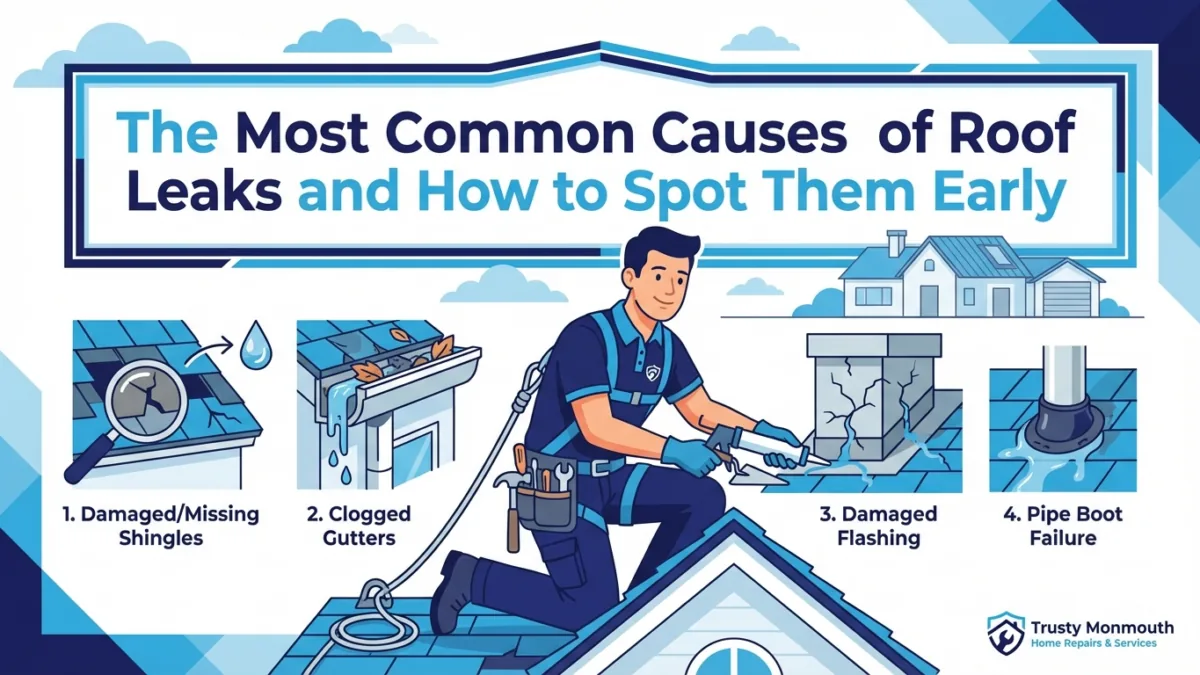
1. Damaged or Missing Shingles
This is the most visible and most common cause of roof leaks. Shingles protect your roof deck from direct exposure to rain. When they crack, curl, blister, or blow off entirely, they leave your roof vulnerable.
Shingle damage is caused by:
- High winds (especially during NJ’s nor’easters and summer storms)
- Hail impacts
- Falling tree branches
- UV degradation over time
- Age — most asphalt shingles last 20–30 years
What to look for: From the ground or safely using binoculars, check for shingles that appear raised, curled, darker than surrounding ones, or absent altogether.
2. Damaged or Improperly Installed Flashing
Flashing is the thin metal material installed at roof joints and transitions to prevent water infiltration. It’s found around chimneys, skylights, roof valleys, dormers, vents, and pipes.
According to HomeFix’s roof leak guide, faulty flashing is one of the most common culprits behind leaks and one of the most often overlooked. Flashing can crack from thermal expansion and contraction, rust over time, or lift when the sealant fails.
What to look for: Rust staining around chimney bases, visible gaps where flashing meets the chimney or skylight, or missing flashing segments.
3. Clogged or Damaged Gutters
When gutters fill with leaves, twigs, and debris, water has nowhere to go. It backs up onto the roof edge, where it can work its way under shingles and into the roof deck, a process that accelerates during freeze-thaw cycles in Monmouth County winters (commonly called ice damming).
What to look for: Water overflowing gutters during rain, plants growing in gutters, sagging gutter sections, water stains on exterior siding below gutters.
4. Worn or Missing Pipe Boots and Vent Flashing
Every pipe that penetrates your roof, plumbing vents, and exhaust vents is surrounded by a rubber or metal boot that seals the penetration. Over time, rubber boots dry-crack and deteriorate, breaking the seal and allowing water to pour directly into the attic.
This is one of the most common sources of leaks in homes 10–20 years old, and one of the easiest to fix when caught early.
What to look for: Water staining on ceilings near bathrooms or kitchen (often below plumbing vents); visible cracking on rubber boot collars if you can safely access or view the roof.
5. Aging Roofing Materials
All roofing materials have a lifespan. Standard 3-tab asphalt shingles last 15–20 years; architectural shingles typically last 25–30 years. As materials age, they become brittle, lose granules, and develop micro-cracks that allow water infiltration.
Granule loss — the gritty material coating asphalt shingles is an important aging indicator. As granules shed, the underlying asphalt becomes vulnerable to UV damage and water penetration.
What to look for: Excessive granule accumulation in gutters and downspouts. This is often one of the first signs a roof is approaching the end of its service life.
6. Ice Dams (Seasonal NJ Concern)
Monmouth County winters bring freeze-thaw cycles that create ice dams — ridges of ice that form at the roof edge and prevent snowmelt from draining properly. Water backs up behind the dam and seeps under shingles.
Ice dams are caused by inadequate attic insulation or ventilation, which allows heat to escape through the roof and melt snow unevenly.
What to look for: Icicles forming along roof edges, visible water staining on exterior walls below rooflines in winter.
7. Poor Attic Ventilation
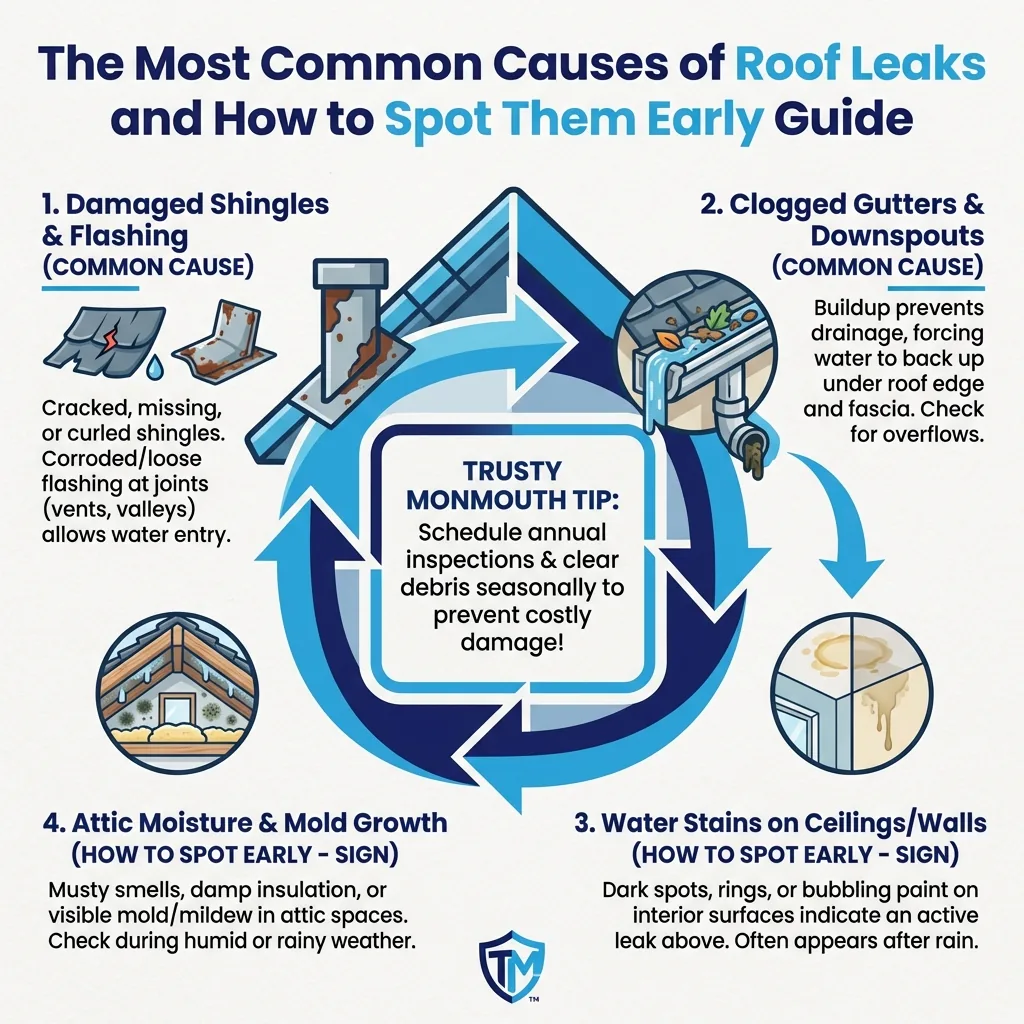
Inadequate attic ventilation traps heat and moisture. In summer, this superheats shingles from below, shortening their lifespan. In winter, it contributes to ice dam formation. Year-round, it accelerates moisture buildup that leads to wood rot, mold growth, and insulation damage.
What to look for: Unusually high attic temperatures in summer, visible mold on attic decking or rafters, musty odors when accessing the attic.
Early Warning Signs Inside Your Home
Don’t wait for a visible drip to investigate. These interior signs often appear before a leak becomes obvious:
| Warning Sign | What It Means |
|---|---|
| Yellow or brown ceiling stains | Water has infiltrated and dried, likely multiple times |
| Peeling or bubbling paint on ceilings and walls | Moisture trapped behind surfaces |
| Musty odor in attic or upstairs rooms | Hidden moisture accumulation |
| Sagging or soft spots in drywall | Water saturation — act immediately |
| Damp or compressed attic insulation | Active or recent water intrusion |
| Mold or dark spotting on attic wood | Chronic moisture problem |
According to Melo Roofing’s homeowner guide, water stains that appear as yellow, brown, or rust-colored rings on ceilings — especially rings that expand after rainfall — are among the clearest early indicators of an active roof leak.
What to Do If You Suspect a Roof Leak
- Don’t ignore it. Water damage accelerates. What costs $300 to fix today can cost $3,000 next year.
- Check your attic. Grab a flashlight and look for moisture, staining, or mold on the underside of your roof deck and rafters.
- Trace the water path. The leak source is often uphill from where you see ceiling staining — follow the path of water along rafters to find the entry point.
- Call a professional. Roof work involves both technical expertise and fall hazards. A qualified professional can safely assess the damage and perform necessary repairs.
- Document the damage. If water damage is extensive, photograph everything before repairs begin — you may need this for a homeowner’s insurance claim.
How Often Should You Inspect Your Roof?
| Inspection Type | Recommended Frequency |
|---|---|
| Basic visual ground check | Twice per year (spring and fall) |
| Gutter cleaning and inspection | At least twice yearly |
| Professional roof inspection | Every 3–5 years, after major storms |
| Post-storm inspection | After any significant hail, wind, or ice event |
The GAF homeowner roof leak guide recommends scheduling regular professional inspections, especially for homes over 10 years old, as part of a proactive maintenance plan.

Roof Leak Repairs in Monmouth County
At The Trusty Monmouth County Handyman, we handle a wide range of roof-related repairs from flashing replacement and vent boot sealing to minor shingle patching and gutter repair. We’re available 24/7 for emergency situations, and we back our work with a satisfaction guarantee and warranty protection on labor.
With 25+ years of experience and full licensing and insurance, we’re the trusted choice for homeowners across West Long Branch and Monmouth County.
If you’ve spotted any of these warning signs, don’t wait. Call (848) 272-9900 for a free estimate and a prompt, professional inspection.
Serving West Long Branch and all of Monmouth County, NJ — 24 hours a day, 7 days a week.