Key Takeaways
- Small drywall holes and cracks are easy fixes that prevent bigger problems later
- Paint touch-ups work best when you match the exact color and sheen
- Most wall damage comes from everyday life—doorknobs, furniture, and settling
- Proper prep work makes the difference between a patch that blends and one that stands out
- Professional help saves time and delivers results that look like new
- West Long Branch homeowners can tackle small fixes but should call pros for larger repairs
What Causes Drywall Damage in Your Home?
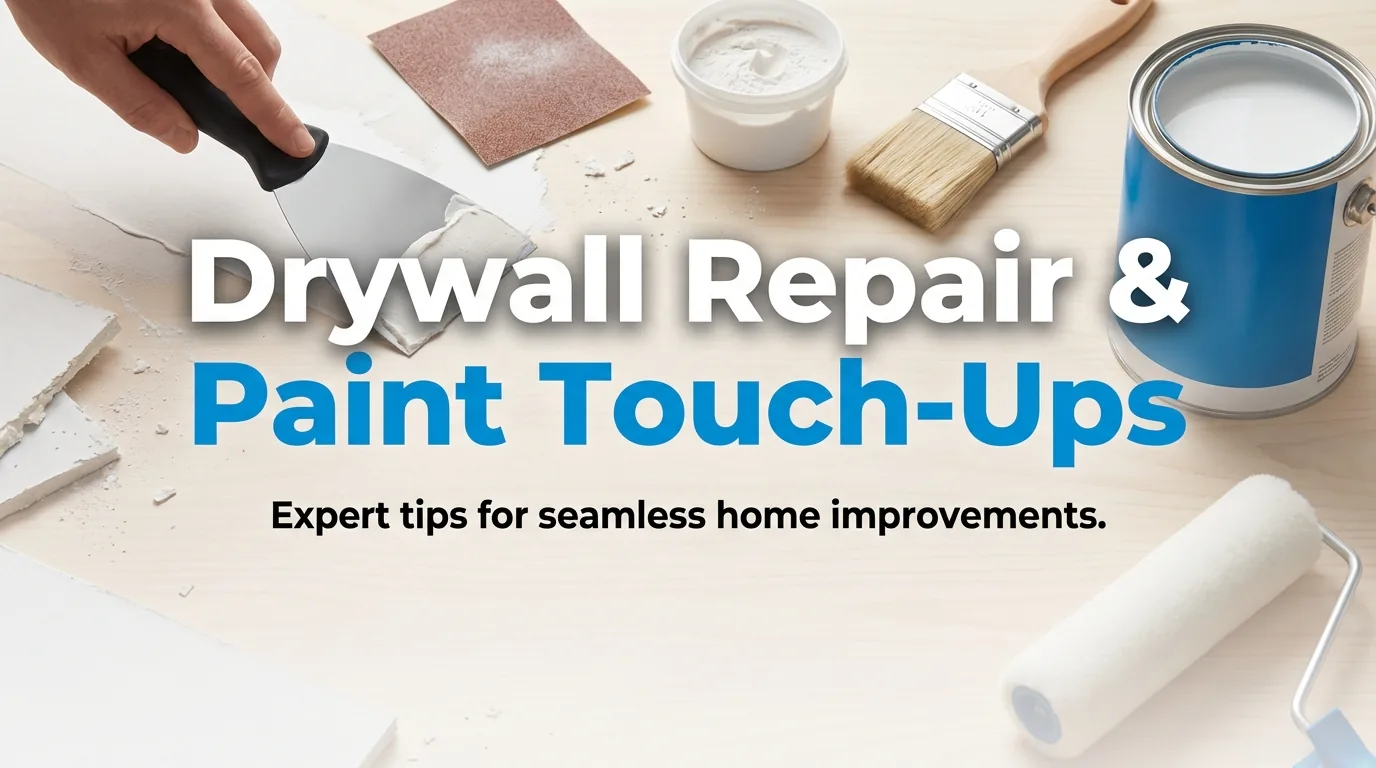
Drywall damage happens to every home. It’s just part of life. At Trusty Monmouth County Handyman in West Long Branch, NJ, we see the same issues in house after house.
Doorknobs punch holes when doors swing open too fast. Kids bump walls with toys. Furniture scrapes against surfaces during moves. Even your home settling creates cracks over time.
Water damage is another big culprit. A small roof leak or pipe drip can ruin drywall fast. The material soaks up moisture like a sponge.
Here are the most common causes we see:
| Damage Type | Common Cause | Repair Difficulty |
|---|---|---|
| Small holes | Nails, screws, picture hangers | Easy |
| Medium holes | Doorknob impacts | Moderate |
| Large holes | Accidents, plumbing access | Hard |
| Cracks | House settling, temperature changes | Moderate |
| Water stains | Leaks, humidity | Varies |
How Do I Fix Small Holes and Nail Pops?
Small holes are the easiest drywall repair you can do. You just need a few basic supplies.
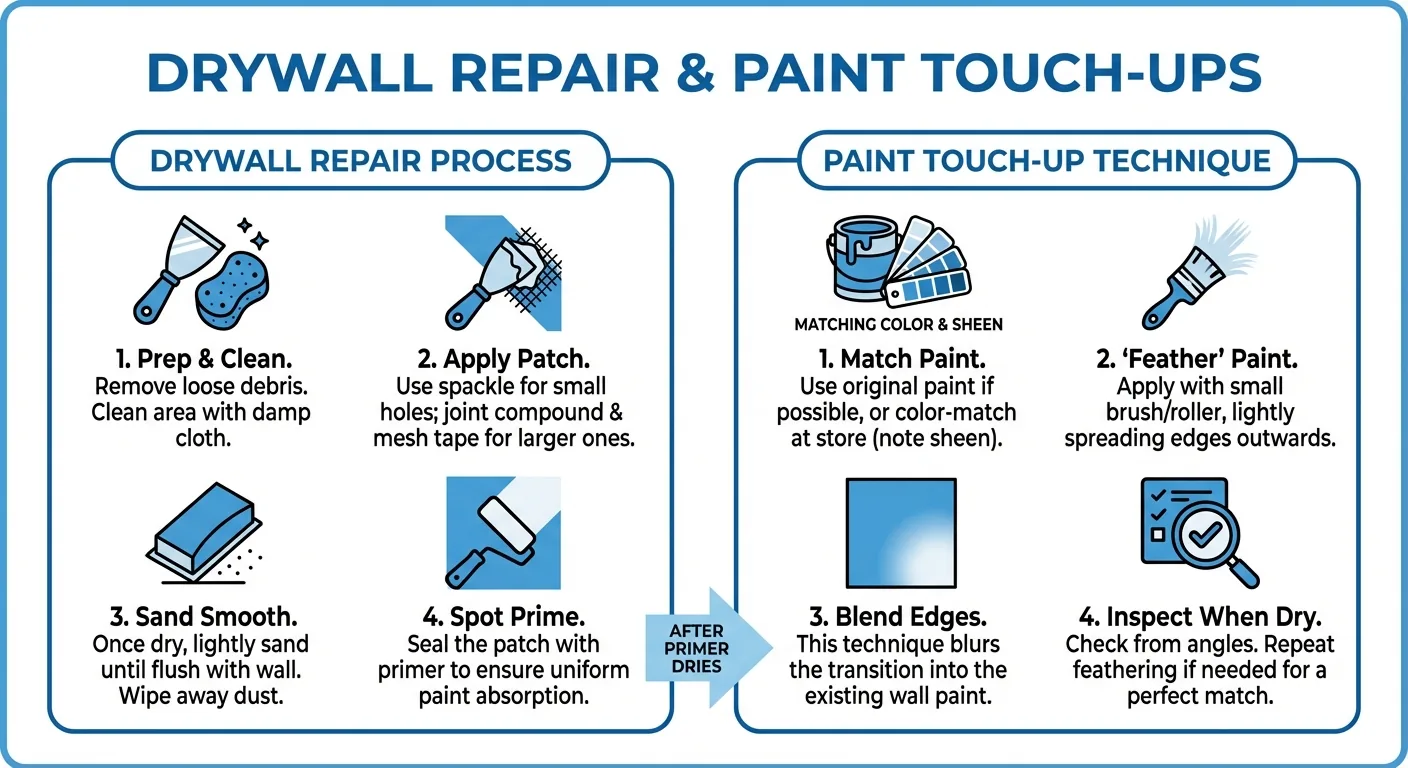
For tiny nail holes, use lightweight spackling paste. Apply it with your finger or a small putty knife. Let it dry. Sand it smooth. Done.
Nail pops happen when nails back out of studs. You’ll see a small bump or circle on your wall. Drive a new drywall screw above and below the pop. Then tap the old nail back in. Cover with joint compound.
According to Lowe’s repair guide, you should apply thin coats and sand between each layer. This creates the smoothest finish.
Pro tip: Always let each coat dry fully. Rushing leads to cracks and bubbles.
If you’re dealing with multiple repairs around your home, check out our guide on what are the benefits of hiring a handyman for drywall repairs in West Long Branch, NJ.
What’s the Best Way to Patch Medium and Large Holes?
Medium holes need a different approach. You can’t just fill them with spackling.
For holes up to 6 inches, use a self-adhesive mesh patch. Stick it over the hole. Apply joint compound over the mesh. Let it dry. Apply two more thin coats, sanding between each.
Large holes require cutting out the damaged section. You’ll need a piece of new drywall to fill the gap. This is where many DIYers get stuck.
The Home Depot repair tutorial explains the California patch method. It works great for holes between 4-8 inches.
Here’s a quick breakdown:
Small holes (under 1 inch): Spackling paste only
Medium holes (1-6 inches): Mesh patch plus joint compound
Large holes (over 6 inches): Cut and replace the drywall section
How Do I Match Paint for Touch-Ups?
Paint matching is tricky. Even the same paint can look different over time.
Walls fade from sunlight. They collect dust and grime. A fresh touch-up often looks brighter than the surrounding area.
Start by finding your original paint color. Check leftover cans in your garage. Look for the color code on the lid.
No leftover paint? Cut a small chip from a hidden spot. Take it to a paint store for matching. Sherwin-Williams and Benjamin Moore both offer color-matching services.
Here’s what affects your touch-up success:
- Sheen matters. Flat, eggshell, satin, and semi-gloss all look different.
- Application method matters. Brush strokes show more than roller texture.
- Temperature matters. Paint dries differently in cold versus warm rooms.
For the best results, paint the entire wall from corner to corner. This hides any color differences.
What Tools Do I Need for Wall Restoration?
Good tools make every job easier. Here’s what you need for basic drywall repair and paint touch-ups.
For patching:
– Putty knife (4-inch and 6-inch) – Sanding sponge or fine sandpaper – Lightweight spackling paste – Joint compound – Self-adhesive mesh patches – Drywall saw (for large repairs)
For painting:
– Quality brush (2-inch angled) – Small foam roller – Paint tray – Painter’s tape – Drop cloth
Don’t cheap out on brushes. A $15 brush applies paint smoother than a $3 brush. You’ll see the difference.
Many West Long Branch homeowners find that having the right tools on hand saves money over time. But knowing when to call a good handyman near me saves even more time and hassle.
When Should I Call a Professional?
Some repairs are beyond DIY skills. That’s okay. Knowing your limits saves money in the long run.
Call a pro when you see:
- Water damage with possible mold
- Cracks that keep coming back
- Large sections of damaged drywall
- Textured ceilings that need matching
- Multiple rooms needing work
Professional handymen have the experience to blend repairs perfectly. They know the tricks that take years to learn.
As discussed in Reddit’s DIY community, even experienced DIYers struggle with making patches invisible. The finishing work requires a skilled touch.
Our team at Trusty Monmouth County Handyman handles wall restoration projects big and small. We’re fully licensed and insured for your peace of mind.
If you’re also dealing with other home issues, we offer handyman carpentry services and can help with door installation, too.
What Are Common Mistakes to Avoid?
Even simple repairs go wrong when you skip steps. Here are the mistakes we see most often.
Skipping primer. New drywall compound absorbs paint differently. Prime patched areas first. Otherwise, you’ll see shiny spots called “flashing.”
Applying too much compound. Thick layers crack and take forever to dry. Multiple thin coats work better.
Not feathering edges. The edges of your patch should blend into the wall. Feather the compound outward in thin layers.
Using the wrong paint sheen. Flat paint hides imperfections. Glossy paint shows every bump and ridge.
Painting too soon. Joint compound needs to be fully dry. Touch it before painting. If it’s cool to the touch, wait longer.
One helpful Reddit thread points out that patience is the key ingredient most people forget.
How Long Does Drywall Repair Take?
Time depends on the size of your repair and drying conditions.
| Repair Type | Active Work Time | Total Time (with drying) |
|---|---|---|
| Nail holes | 5 minutes | 2-4 hours |
| Small patches | 15-30 minutes | 24 hours |
| Medium patches | 1-2 hours | 2-3 days |
| Large patches | 2-4 hours | 3-5 days |
Each coat of joint compound needs 24 hours to dry. You can’t rush this step.
Humidity slows drying. In West Long Branch, our coastal air can add extra time during summer months.
Professional handymen often complete jobs faster because they know exactly how to work efficiently. Check out our all around handyman services for help with any home project.
Conclusion: Get Your Walls Looking New Again
Drywall repair and paint touch-ups keep your home looking fresh. Small fixes prevent bigger problems down the road.
You can handle tiny nail holes yourself. But larger repairs often need a pro’s touch to look right.
Ready to restore your walls? Call Trusty Monmouth County Handyman at (848) 272-9900 today. We’re fully licensed and insured, serving West Long Branch, NJ and surrounding areas.
Visit our blog for more helpful home maintenance tips.