Key Takeaways
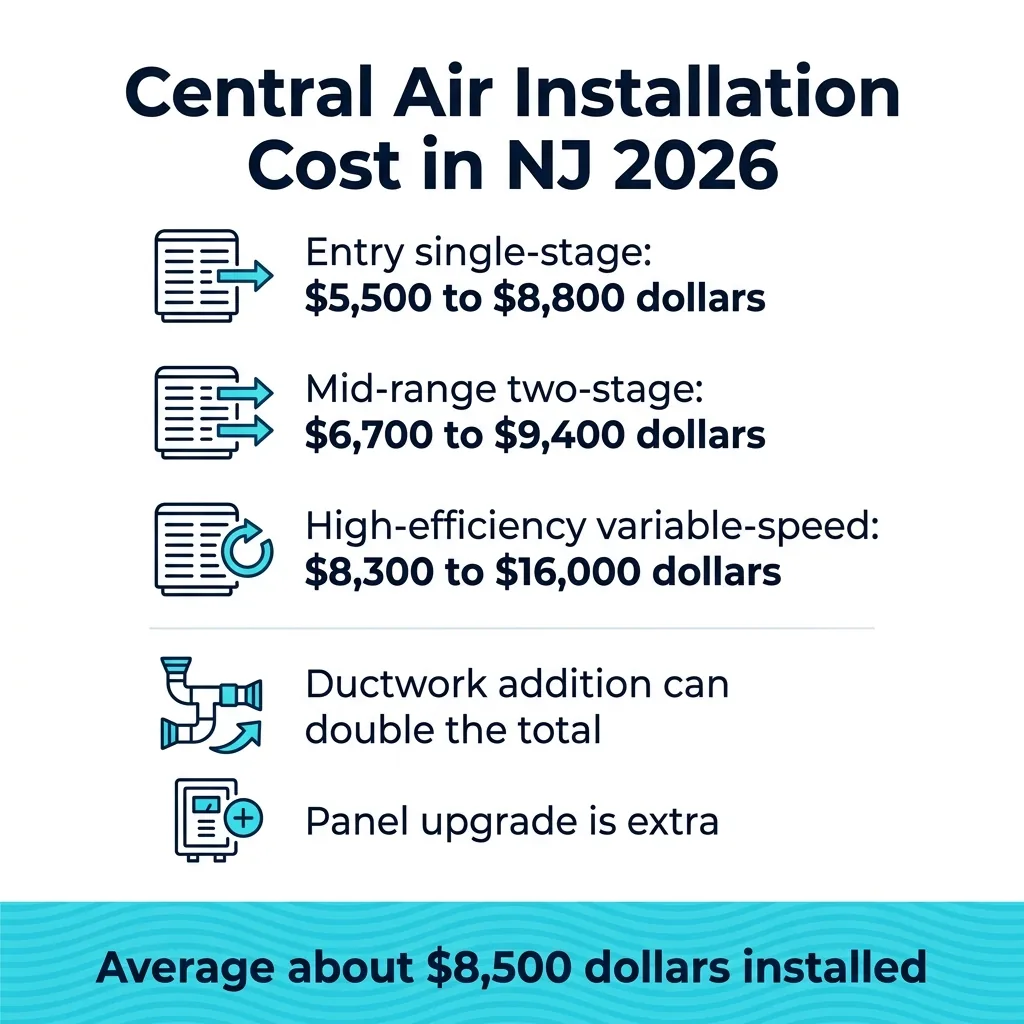
- Central air installation in NJ typically runs $5,500 to $16,000 total, with an average around $8,500, depending on system type, home size, and ductwork condition.
- Homes without existing ductwork pay significantly more: adding ducts can double the total project cost.
- Air conditioners account for roughly 12% of household electricity use nationally, making efficiency (SEER rating) a real dollar-and-cents decision.
- Monmouth County’s mix of 1960s ranch homes, Cape Cods, and shore bungalows creates common challenges: tight attic space, no existing ductwork, and undersized electrical panels.
- NJ requires a permit for central air installation in almost all cases, including refrigerant handling by an EPA 608-certified technician.
Central air installation in New Jersey costs between $5,500 and $16,000 depending on your system type, home size, and whether you have ductwork. Most Monmouth County homeowners land somewhere between $7,000 and $10,000 for a standard central AC replacement.
The Numbers: What Central Air Actually Costs in NJ
Sticker price and installed price are two different things. Here’s what the full project typically includes.
The unit itself. A central AC condenser and air handler combo (sometimes called a split system) accounts for roughly half the total cost. Entry-level single-stage units run less than mid-range two-stage or variable-speed systems, which adjust output based on demand and run more efficiently. Variable-speed systems cost more upfront but reduce energy bills and keep indoor humidity lower, which matters a lot here in humid summers near the shore.
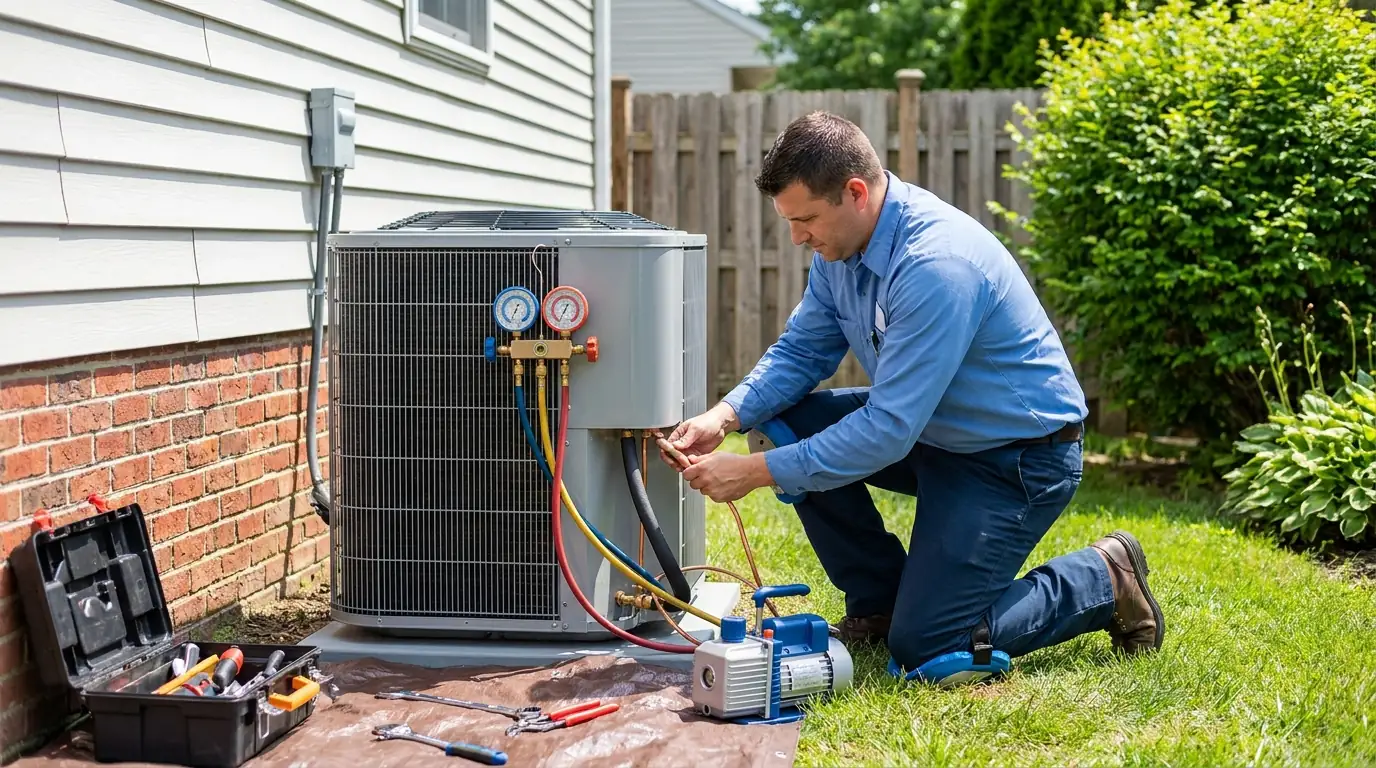
Labor and refrigerant. Installing a central air system involves electrical work, refrigerant handling, ductwork connections, thermostat wiring, and a startup test. Monmouth County HVAC labor rates run on the higher end of the NJ range. Refrigerant handling requires an EPA Section 608 certification, so licensed installation is non-negotiable.
Ductwork. If you have ducts in decent shape, you reuse them. If they’re leaky, undersized, or simply don’t exist, that’s where projects get expensive fast. Adding ductwork to an older home can substantially increase the total, often doubling the project cost or more.
| System Type | Installed Cost Range |
|---|---|
| Entry-level single-stage central AC | $5,500 to $8,800 |
| Mid-range two-stage system | $6,700 to $9,400 |
| High-efficiency variable-speed system | $8,300 to $16,000 |
| Ductwork addition (existing home) | Varies significantly; can double total project cost |
| Electrical panel upgrade (if needed) | Additional cost; consult electrician for your home |
Source: IndoorTemp: Air Conditioner Replacement Cost 2026
Why Monmouth County Jobs Often Cost More Than the National Average
Generic cost estimates come from a national baseline. NJ, and the shore region in particular, has factors that push costs up.
Older housing stock. A large share of homes in West Long Branch, Long Branch, and the surrounding towns were built before 1980. Many have no ductwork at all, especially older Cape Cods and bungalows, where the second floor was finished later. When there’s no ductwork, the project is really an HVAC build-out, not a simple swap.
Electrical panels. Older homes commonly have 100-amp panels. A modern central AC system, especially a higher-efficiency unit, often requires a 200-amp service. Panel upgrades are a separate cost, but skipping them isn’t an option. Undersized service is a fire risk. Our electrical services team handles panel upgrades and service coordination as part of the larger project when needed.
Salt-air corrosion. Homes within a mile or two of the shore deal with accelerated corrosion on outdoor condenser units. Stainless-steel or coastal-rated equipment costs more. It also lasts significantly longer in that environment. Skimping on the outdoor unit near the ocean is a short-term saving that becomes a five-year replacement.
Permit requirements. NJ requires permits for central air installation. Monmouth County municipalities enforce this consistently. Budget a few hundred dollars for the permit itself plus inspection scheduling, on top of the installed system cost.
SEER Ratings: Why the Number on the Label Matters
SEER stands for Seasonal Energy Efficiency Ratio. A higher SEER means the unit moves more cooling per unit of electricity. NJ, like other northern states, requires a minimum efficiency rating for new installations, and newer high-efficiency systems deliver significantly more cooling per unit of electricity. ENERGY STAR certified systems must meet SEER2 thresholds set federally.
Air conditioners account for about 12% of household electricity use nationally, according to the U.S. Department of Energy. That number climbs during NJ’s humid summers when systems run for weeks at a time. Upgrading from a 10-SEER unit (common in pre-2006 installations) to a 16-SEER or higher system cuts cooling energy use noticeably. The payback period depends on how much you run the system and your local utility rate.
If you’re also thinking about reducing energy costs across the home, our post on home repair issues in coastal West Long Branch homes covers the broader picture of efficiency improvements for shore-area properties.
Ductless Mini-Splits: A Realistic Alternative for Older Homes
If adding ductwork is cost-prohibitive, a ductless mini-split system deserves a serious look. Mini-splits have an outdoor compressor and one or more indoor air handlers mounted high on the wall. No ducts required.
They’re particularly good fits for:
- Homes where adding ductwork would require opening walls and ceilings
- Older Cape Cods where the second floor has no duct access
- Room additions or converted garages where extending existing ducts is impractical
- Rental units or multi-family homes needing zone control
A single-zone mini-split typically runs several thousand dollars installed, and multi-zone systems covering three to four rooms cost significantly more. The efficiency ratings on modern mini-splits often exceed standard central systems, and they double as heat pumps for year-round use.
What to Ask Before You Sign a Quote
Not every HVAC quote covers the same scope. Here’s what to confirm in writing before you commit:
Is the price all-in? Ask whether the quote includes the unit, refrigerant, labor, permits, thermostat, and startup testing. Some quotes are unit-only. Others leave permits as a “TBD.”
What SEER is the system? A lower-SEER system costs less to buy but more to run. Know what you’re getting.
What’s the warranty? Manufacturers typically offer 10-year parts warranties on registered equipment. Labor warranties vary by contractor. Ours covers workmanship.
Who pulls the permit? The licensed contractor pulls it. If a quote says “permits are your responsibility,” walk away.
When you’re ready to get a real number for your home, call us at (848) 272-9900 for a free estimate with no vague ranges. We’ve been handling home repair and HVAC coordination across Monmouth County for 25 years and give you a straight answer on scope and cost.
Frequently Asked Questions
1. How much does central air cost for a 2,000-square-foot home in NJ?
A 2,000 square-foot home typically needs a 3 to 4-ton central AC system. Installed cost for a standard replacement (existing ductwork in good shape) runs roughly $7,000 to $10,500 in Monmouth County. Homes without ductwork should budget $12,000 to $18,000 or more for a full duct-and-system installation. Variable-speed systems and coastal-rated equipment push costs toward the higher end.
2. What is the $5,000 rule for HVAC?
The “$5,000 rule” is a rough calculation used to decide whether to repair or replace an aging HVAC unit: multiply the system’s age (in years) by the repair cost. If the result exceeds $5,000, replacement typically makes more sense economically. For example, a 12-year-old unit with a $500 repair quote scores 6,000, suggesting replacement is the better long-term move.
3. Does central air installation in NJ require a permit?
Yes. New Jersey requires permits for central air conditioning installation in virtually all cases. The refrigerant work also requires an EPA Section 608-certified technician. Your licensed HVAC contractor pulls the permit. Inspectors verify the electrical connections, refrigerant charge, and equipment installation. Permit fees vary by municipality; confirm the exact amount with your local construction office in Monmouth County before starting.
4. How long does central air installation take?
A standard central AC replacement on an existing system with working ductwork takes one to two days. Adding ductwork to a home that has none typically takes three to five days, sometimes longer in older homes where running new ducts requires creative routing. Electrical panel upgrades, if needed, add a separate day and inspection step.