Key Takeaways
- Toilet installation typically runs $635 to $1,151 nationally, with NJ labor rates pushing most Monmouth County jobs toward the higher end of that range.
- Labor alone is a significant portion of the total: factor in at least one to two hours of licensed plumber time for a straightforward swap.
- Toilet type matters: one-piece models, wall-hung toilets, and smart toilets cost more to install than standard two-piece units.
- In NJ, toilet replacement in an existing rough-in location generally does not require a permit. Moving the drain or rough-in does.
- Most jobs in West Long Branch and the surrounding area take two to four hours from shutoff to final flush test.
Replacing a toilet in Monmouth County typically costs between $635 and $1,151 for a standard swap, including the fixture and labor. Add more for a premium fixture or any rough-in adjustments.
What You’re Actually Paying For
Toilet installation cost is not just the toilet. The total breaks down into three buckets: the fixture itself, labor, and any unexpected extras.
The fixture. A basic two-piece elongated toilet runs $150 to $400 at most home improvement stores. One-piece models start around $300. Smart toilets with bidet functions or auto-flush start above $600 and can run well past $1,500. What you choose drives the material cost more than anything else.
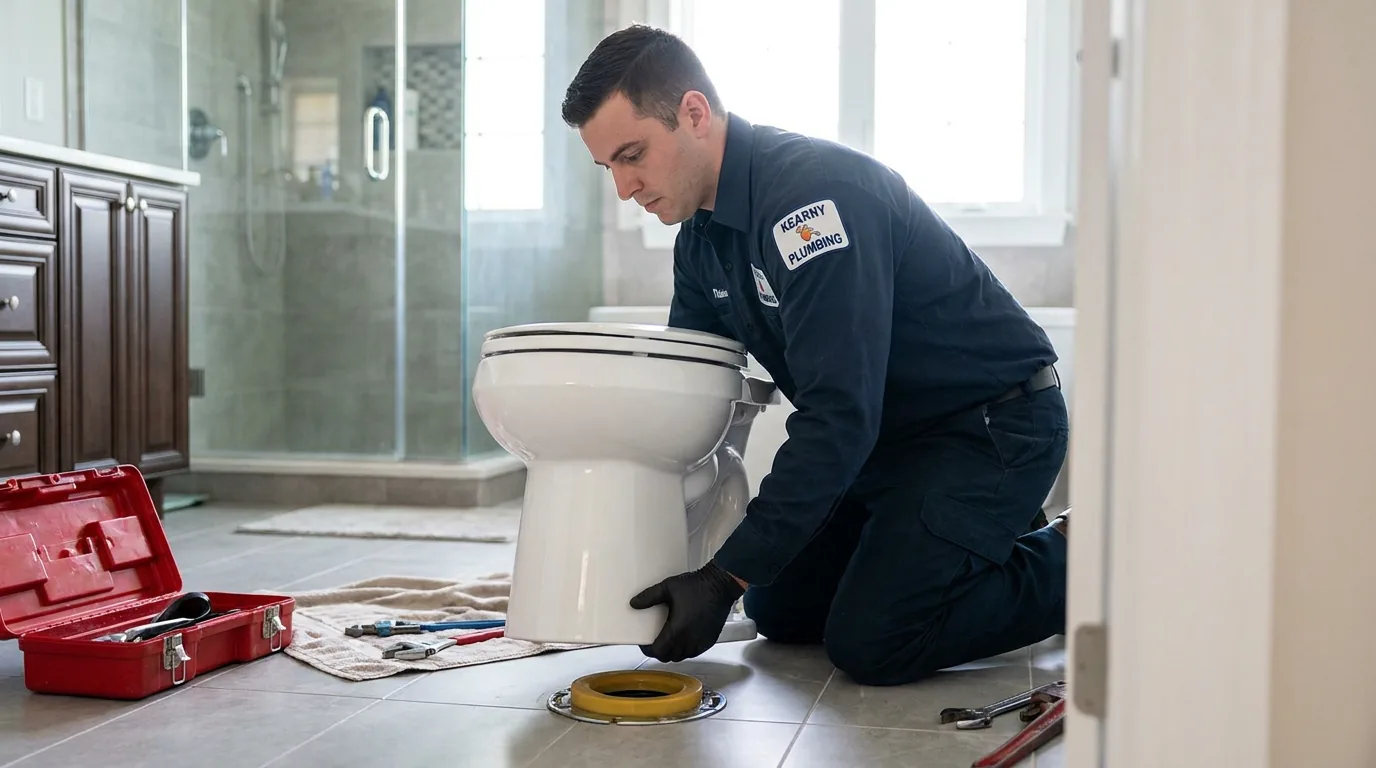
Labor. A licensed plumber in Monmouth County charges for time, not just the fixture. A clean swap, where the new toilet matches the existing 12-inch rough-in and the flange is in good shape, takes about one to two hours. If the flange is cracked, corroded, or the wrong height (common in older West Long Branch homes built in the 1950s and 60s), add time and cost.
Extras. Wax ring, supply line, flange bolts, and shutoff valve are small parts that add up. Many installers include these in the quoted price, but ask before you assume. Debris hauling for the old toilet may be a separate line item.
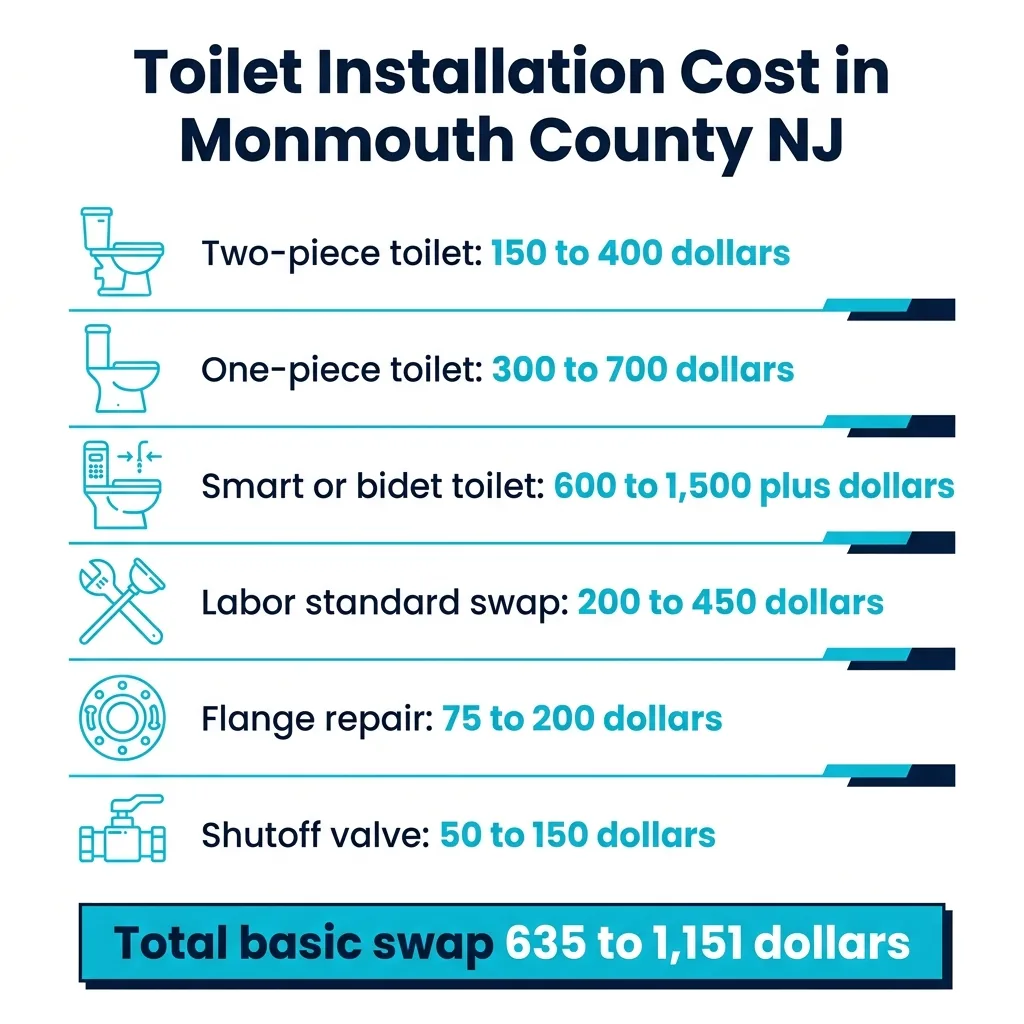
| Cost Category | Typical Range |
|---|---|
| Standard two-piece toilet (fixture only) | $150 to $400 |
| One-piece toilet (fixture only) | $300 to $700 |
| Smart or bidet toilet (fixture only) | $600 to $1,500+ |
| Labor, standard swap | $200 to $450 |
| Flange repair (if needed) | $75 to $200 |
| Shutoff valve replacement | $50 to $150 |
| Total, basic swap (all-in) | $635 to $1,151 |
Source: Homewyse : Cost to Install a Toilet (2026)
What Drives the Price Up in NJ
A few factors push Monmouth County toilet installation costs above the national average.
Licensed labor rates. NJ requires licensed plumbers for any work connecting to the home’s supply or drain lines. Plumbing labor rates in Monmouth County run higher than the national baseline.
Older homes and non-standard rough-ins. Shore-area housing stock from the 1950s through 1970s sometimes has 10-inch rough-ins instead of the modern 12-inch standard. That means you need a toilet specifically sized for it, or the drain line moves. Either way, cost goes up.
Coastal conditions. Homes closer to the shore sometimes deal with mineral buildup in supply lines and corroded shutoff valves due to salt air. It’s not unusual for us to replace the shutoff valve during a toilet install in older homes in this area. A valve that’s been frozen shut for 20 years needs to come out anyway.
Weekend or emergency calls. We handle same-day plumbing service around the clock, but emergency scheduling on nights or weekends costs more than a weekday appointment.
Do You Need a Permit to Replace a Toilet in Monmouth County?
For a like-for-like toilet swap, the answer is generally no. You’re replacing a fixture in the same location using the existing drain, supply line, and rough-in. NJ code does not require a permit for that scope of work when done by a licensed plumber.
Permits are required when you move the drain, change the rough-in location, or add a toilet where there wasn’t one. If your renovation involves any of those, your contractor needs to pull a plumbing sub-permit through your local town’s construction office. Most West Long Branch and Monmouth County municipalities process plumbing permits within a few business days.
If you’re not sure what’s required for your specific job, a quick call to your township’s construction department answers it in minutes. We always confirm permit requirements before starting any new rough-in work.
One-Piece vs. Two-Piece: Which Should You Install?
Most Monmouth County homes have two-piece toilets, and that’s still the most common replacement. They’re easier to ship, less expensive to buy, and easier to repair because the tank and bowl are separate.
One-piece toilets cost more upfront but look cleaner, have fewer seams where leaks can develop, and are easier to clean. For a bathroom renovation or upgrade, they’re worth considering. Just expect a modest additional labor charge since they’re heavier and more awkward to maneuver in a tight bathroom.
Wall-hung toilets cost the most. Installation requires opening the wall to install a carrier frame, which adds a day of work and several hundred dollars. They look great, but they’re not a casual swap.
You can read more about bathroom renovation services we handle across the area if you’re thinking about a larger scope update.
How to Tell If Your Toilet Actually Needs Replacing
Not every toilet problem calls for a full replacement. A running toilet is almost always a flapper, fill valve, or float issue, which costs a few dollars in parts and 30 minutes. A rocking toilet is usually just loose bolts or a bad wax ring. A crack in the tank or bowl is the one that calls for a new unit.
Age matters too. A toilet that’s more than 20 to 25 years old uses significantly more water per flush than modern models. WaterSense-labeled toilets use 20% less water per flush than the current federal 1.6-gallon standard, and can reduce household toilet water use by 20 to 60 percent annually, according to the EPA. If you’re replacing an older toilet on a well or paying high municipal water bills, the payback on a new efficient unit comes faster than you’d expect.
We cover water efficiency and leak repair in our other guides. If you’re seeing water bills climb with no obvious cause, a running or leaking toilet is often the culprit.
If you’re ready to schedule or just want a straight estimate with no surprises, call The Trusty Monmouth County Handyman at (848) 272-9900. We’re fully licensed, insured, and available 24/7 across West Long Branch and Monmouth County.
Frequently Asked Questions
1. How much does labor cost to install a toilet in NJ?
Labor for a standard toilet swap in Monmouth County typically runs $200 to $450, depending on job complexity. A clean swap on an existing rough-in takes one to two hours. Flange repairs, shutoff valve replacement, or non-standard rough-in dimensions add time and cost. Always confirm whether the quote is all-in or labor-only.
2. Do I need a permit to replace a toilet in New Jersey?
For a like-for-like replacement in the same location, no permit is required. NJ building code reserves permits for new plumbing rough-ins, drain relocations, or additions. If you’re moving the toilet or adding one where there wasn’t one before, your licensed plumber must pull a sub-permit through the local municipal construction office.
3. How long does toilet installation take?
A standard swap takes one to two hours for a licensed plumber. That includes turning off the water supply, removing the old toilet, inspecting the flange, setting the new wax ring, bolting the new unit, and testing for leaks. Add another hour if the flange needs repair or the shutoff valve needs replacing.
4. What is the cheapest way to replace a toilet in Monmouth County?
Choosing a standard two-piece elongated toilet in the $150 to $300 range and scheduling on a weekday keeps total costs toward the low end. The homewyse national average starts at $635 for a basic swap. Avoid weekend emergency scheduling if your situation allows, and confirm the quote includes parts (wax ring, supply line, bolts) before signing.