Key Takeaways
- Fixr puts typical boiler repair at $150–$750, with a national average near $450.
- Common parts: expansion tank $200–$800, circulator pump $300–$1,100, and zone valve $175–$500.
- Expect a diagnostic fee of about $75–$250 before any repair.
- Full replacement averages about $6,100 on Fixr’s numbers. ENERGY STAR gas boilers are rated at 90% AFUE or higher.
- Any home with a gas or oil boiler needs working carbon monoxide alarms near sleeping areas.
Boiler repair in Freehold usually costs a few hundred dollars for a single part like a zone valve or expansion tank. Bigger parts like a circulator or gas valve push toward $1,000. Replacement is a different budget entirely, averaging about $6,100 nationally. Here is how to tell which you need and what drives the number.
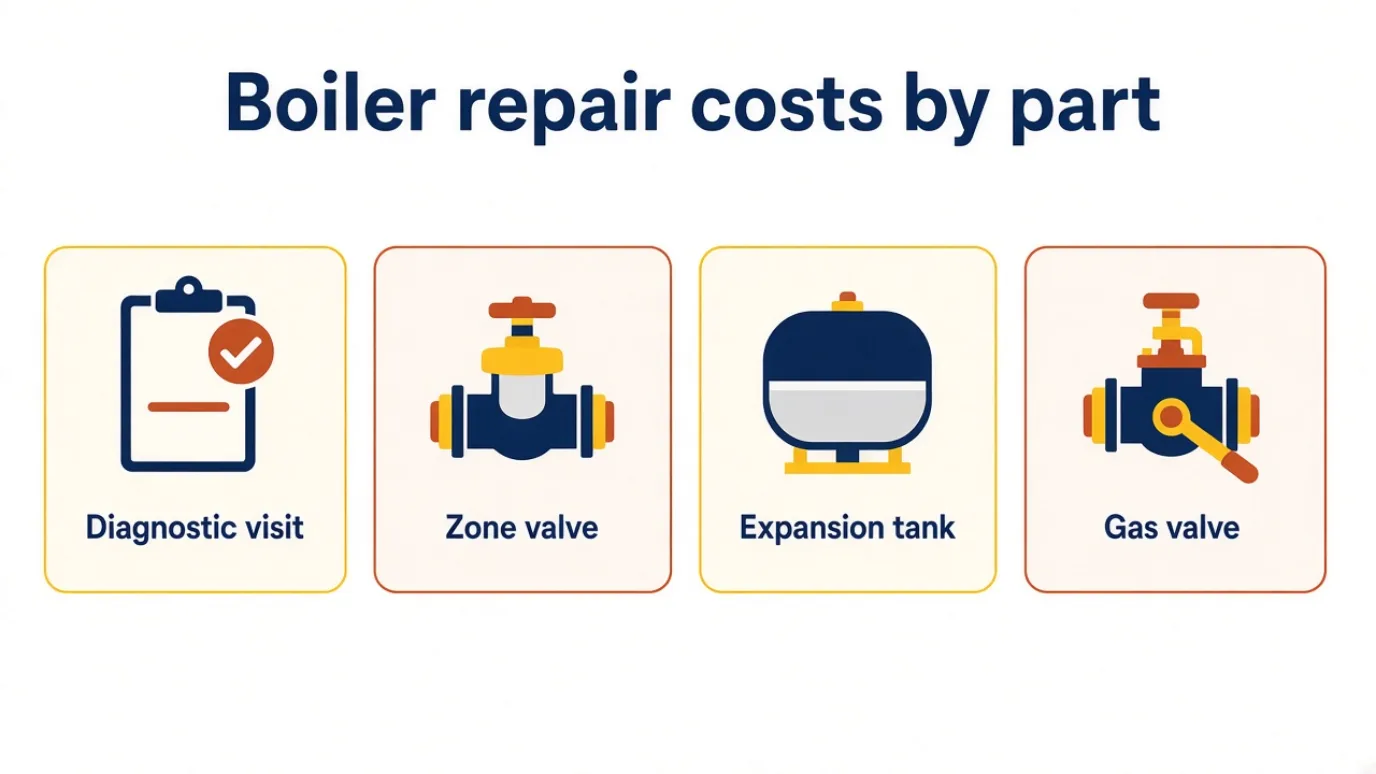
Boiler repair costs by part
National ranges from Fixr. Freehold quotes will vary with fuel type, access, and the age of your system.
| Repair | National range (Fixr) | Common sign |
|---|---|---|
| Diagnostic visit | $75–$250 | Any no-heat call |
| Zone valve | $175–$500 | One zone cold, others fine |
| Expansion tank | $200–$800 | Pressure relief valve dripping |
| Gas valve | $200–$1,100 | Burner will not light |
| Circulator pump | $300–$1,100 | Boiler hot, radiators cold |
| Leaking boiler | $175–$800 | Water under the unit |
Why it matters here: Many Freehold homes from the 1960s to 1980s still run their original hot water boilers. Parts for older units can be harder to find, which adds time and cost. Ask whether the part is in stock before you approve the repair.
Gas vs oil boilers
Freehold has a mix of natural gas and oil heat. That changes repair costs.
| Fuel | Typical repair range (Fixr) | Notes |
|---|---|---|
| Gas | $100–$400 | Fewer moving parts to service |
| Oil | $200–$550 | Nozzles, filters, and burners need regular service |
Oil boilers need an annual cleaning and tune-up to run well. Skipping it leads to soot, poor efficiency, and more frequent no-heat calls.
Common boiler problems
No heat at all. Check the thermostat, the emergency switch at the top of the basement stairs, and the breaker. On oil systems, check the tank level.
Some rooms cold. A stuck zone valve or air in the lines. Bleeding radiators often fixes air. A zone valve may need replacement.
Banging or kettling noises. Mineral buildup in the heat exchanger or air in the system. Kettling on an old boiler is often a sign it is near the end.
Pressure relief valve dripping. Usually a failed expansion tank or a pressure problem. Do not cap it. That valve prevents dangerous pressure.
Water under the boiler. A leak at a fitting is a repair. A leak from the heat exchanger or cast iron sections often means replacement.
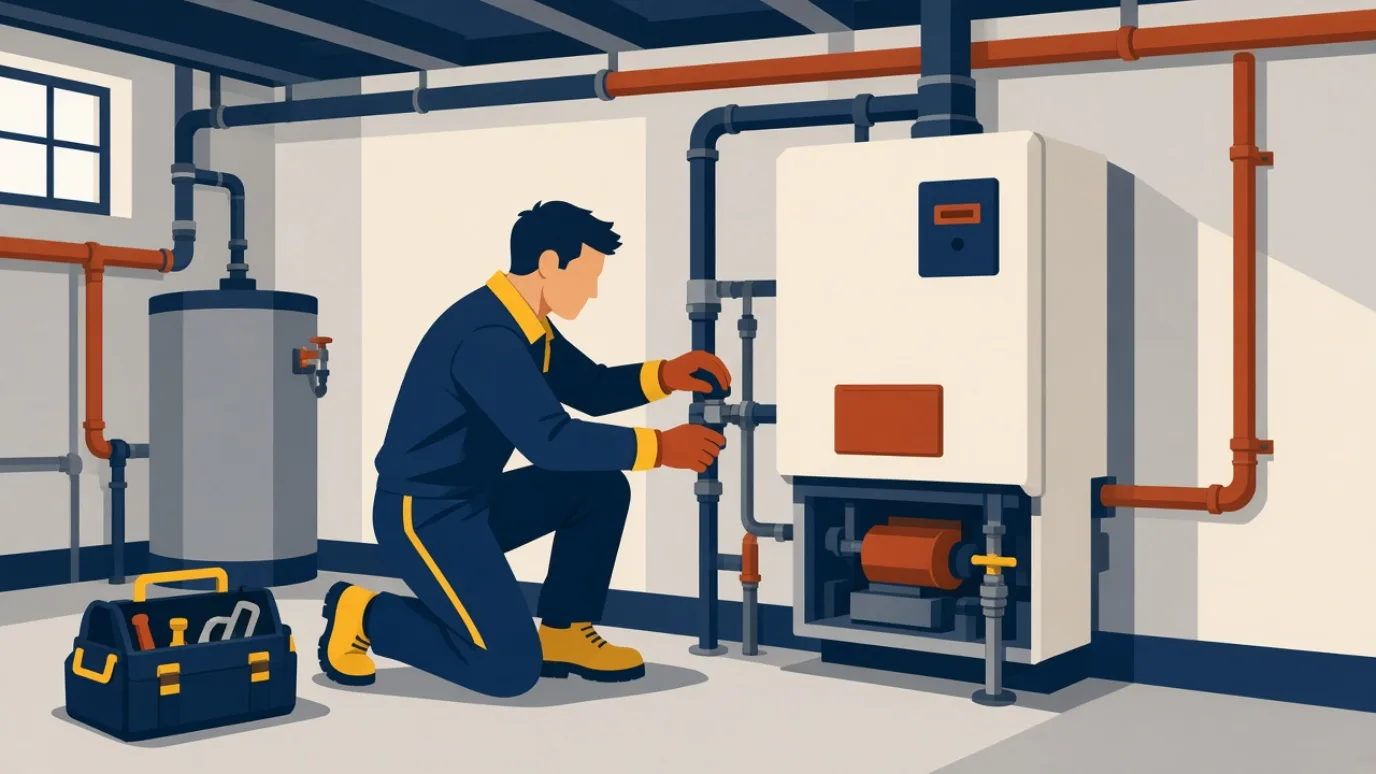
Repair or replace?
Trusty tip: Use the 50 percent rule. If a repair costs more than half of what a new boiler would, and your boiler is over 15 years old, replacement usually makes more sense.
Consider replacement when:
- The heat exchanger or cast iron sections are cracked.
- You need repairs every season.
- Your fuel bills keep climbing for no other reason.
- The unit is old enough that parts are hard to find.
A new ENERGY STAR boiler is rated at 90% AFUE or higher for gas and 87% or higher for oil. AFUE measures how much fuel turns into heat. An older boiler may be well below that.
What replacement costs
Fixr puts the average boiler replacement around $6,100. Your number depends on:
- Fuel type (gas, oil, or a conversion)
- Boiler size and efficiency
- Venting changes (high-efficiency units often need new venting)
- Removal of the old unit
- Permits
In New Jersey, replacing a boiler usually requires a permit under the state’s Uniform Construction Code. A licensed heating contractor pulls it.
Safety first: carbon monoxide
Every boiler that burns fuel can produce carbon monoxide if venting or combustion fails. New Jersey requires CO alarms near sleeping areas in homes with fuel-burning appliances. Test them monthly.
If a CO alarm sounds, get everyone out and call 911 or your gas utility. Do not go back in until it is cleared.
Keep your boiler running
- Book a yearly tune-up before October.
- Bleed radiators at the start of the season.
- Keep the area around the boiler clear.
- Check the pressure gauge. Most residential systems run in a set range shown on the gauge.
- Replace oil filters on schedule.
Our guide to essential winter home maintenance covers other heating season checks. For drafts that make the boiler work harder, see stopping cold air through outlets.
What we handle and when to call a licensed pro
Boiler burners, gas valves, and replacements require a licensed HVAC or plumbing contractor. We handle related work around the system: radiator valves, leaking pipe fittings, water heater work, and the plumbing repairs that often come up alongside a heating call. We are glad to point you to the right licensed trade when the job needs one.
Call (848) 272-9900 if you have a leak, a cold zone, or a noisy radiator, and we will tell you straight whether it is a handyman fix or a heating contractor’s job. For more on what plumbing calls cost locally, read our Freehold plumber guide and our water heater repair service page.
Frequently Asked Questions
How much does it cost to repair a boiler in NJ?
Fixr’s national range is $150–$750, with an average near $450. Your price depends on the part and fuel type.
How long should a boiler last?
With yearly maintenance, many boilers last for decades. Cast iron boilers tend to last longer than newer lightweight designs.
Is it worth repairing a 20-year-old boiler?
For a small part, often yes. For a cracked heat exchanger or repeated failures, replacement usually makes more sense.
Why is my boiler leaking?
Common causes are a failed pressure relief valve, a bad expansion tank, loose fittings, or a corroded heat exchanger.
Do I need a permit to replace a boiler in NJ?
Usually yes. Boiler replacement falls under the state’s construction code and is handled by a licensed contractor.