Key Takeaways
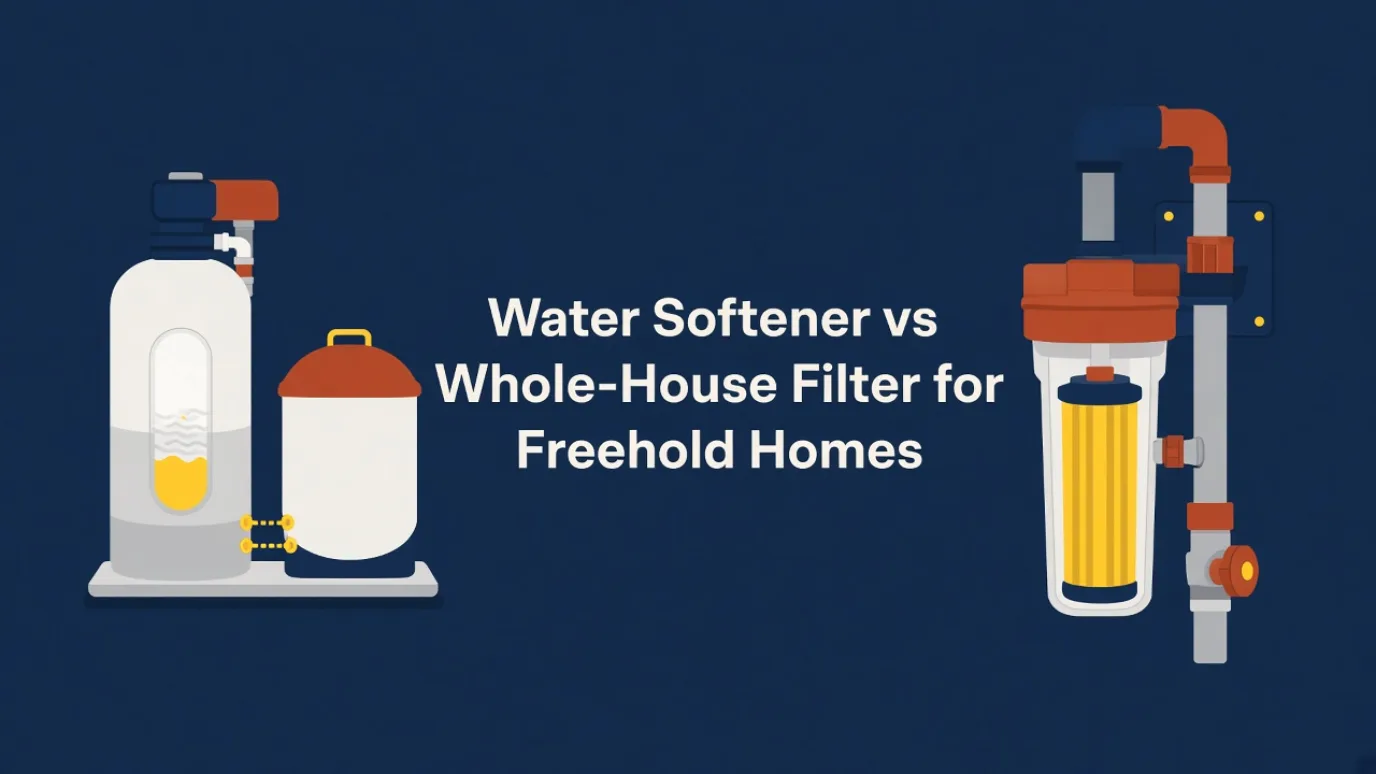
- A water softener removes hardness minerals (calcium and magnesium). A whole-house filter removes sediment, chlorine taste, and some contaminants. They solve different problems.
- USGS classifies water above 120 mg/L as hard and above 180 mg/L as very hard.
- Fixr puts softener installation at $1,100–$3,000, averaging $2,500.
- HomeGuide puts a whole-house filtration system at $850–$5,400 installed, depending on what it treats.
- Test your water first. The test tells you which one you need.
Choose a water softener if your problem is scale: white crust on faucets, spotty dishes, and a water heater full of mineral buildup. Choose a whole-house filter if your problem is taste, odor, sediment, or a specific contaminant. Many Freehold homes on wells end up with both. The only way to know is a water test.
What each system does
| Feature | Water softener | Whole-house filter |
|---|---|---|
| Removes | Calcium and magnesium (hardness) | Sediment, chlorine, some chemicals |
| Solves | Scale, spots, soap scum | Taste, odor, cloudy water |
| How it works | Ion exchange with salt | Physical and carbon media |
| Upkeep | Add salt, occasional service | Replace cartridges on schedule |
| Installed cost | $1,100–$3,000 (Fixr) | $850–$5,400 (HomeGuide) |
Why it matters here: Freehold homes are split between public water and private wells. Public water is treated before it reaches you. Well water is not, so well owners often need both hardness treatment and filtration.
How hard is your water?
USGS uses these levels for hardness, measured as calcium carbonate:
| Level | mg/L |
|---|---|
| Soft | 0–60 |
| Moderately hard | 61–120 |
| Hard | 121–180 |
| Very hard | over 180 |
If you are on public water, your utility publishes an annual water quality report with hardness. If you are on a well, test it. A basic test kit gives you a quick number. A certified lab gives you the full picture.
Signs you need a softener
- White crust on faucets and showerheads
- Spots on dishes and glasses
- Soap that does not lather well
- Stiff laundry
- A water heater that rumbles from mineral buildup
Hard water does not harm your health, but it is hard on fixtures and appliances. Scale cuts water heater efficiency and clogs valves.
Signs you need a filter
- Chlorine taste or smell (public water)
- Rotten egg smell (often sulfur in wells)
- Brown or orange stains (iron)
- Sand or grit in faucet aerators
- Cloudy water
Trusty tip: A softener does not filter. A filter does not soften. If a salesperson says one box does it all, ask exactly what it removes and ask to see the test results it is based on.
When you need both
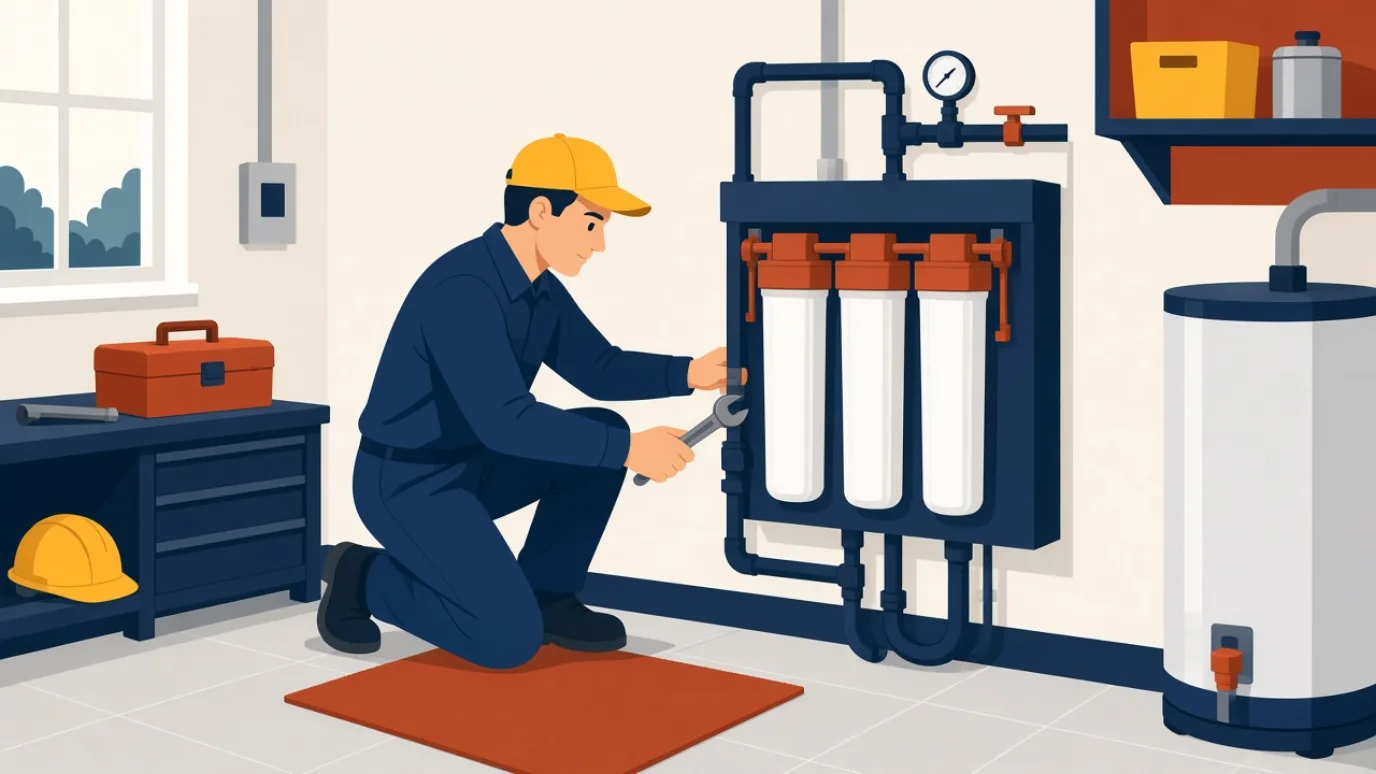
Wells often have hard water and sediment or iron. A common setup is a sediment filter first, then the softener, then a carbon filter. HomeGuide lists a combined carbon, sediment, UV, and softener package at $2,650–$5,400 installed. Fixr lists filter and softener systems at $1,500–$10,000 depending on what is included.
If you have a private well, New Jersey requires a water test when you sell. Testing now helps you plan either way.
Costs and upkeep
Softener. Fixr’s national installed range is $1,100–$3,000. Replacing an existing unit costs about $700–$1,000. Softeners last roughly 10 to 15 years. You will add salt every month or two.
Filter. HomeGuide’s whole-house range is $850–$5,400. Basic carbon, mineral, and sediment filtration runs $850–$1,400. Cartridges need replacing on the maker’s schedule.
Installation details that matter
- Location. Systems go where the main line enters the house, before the water heater.
- Bypass valve. Lets you skip the system during service.
- Drain. Softeners need a drain for backwash.
- Outdoor faucets. Many people leave hose bibs on unsoftened water to save salt.
- Space. Plan room for the brine tank and filter housings.
Common mistakes to avoid
- Buying before testing. Without a test, you are guessing at size and media.
- Undersizing. A softener sized for two people struggles in a house of five. Size it to your water use and hardness.
- Skipping the sediment filter on a well. Grit fouls softener resin and shortens its life.
- Forgetting the salt. A softener with an empty brine tank does nothing.
- Ignoring cartridge schedules. A clogged filter cuts pressure across the whole house and can grow bacteria.
- No bypass. Without a bypass valve, servicing the system means shutting off water to the house.
The short answer for Freehold homes
Start with a test. If hardness is high and nothing else shows up, a softener is the fix. If hardness is normal but you see sediment or smell chlorine, a filter is the fix. Many well homes need both.
We install softeners, filter housings, and bypass valves, and we handle the plumbing that goes with them. See our plumbing services or call (848) 272-9900 to plan your setup. If scale has already hurt your water heater, our water heater installation cost guide explains replacement. Well owners should also read our guide to the signs a well pump is failing.
See our Freehold plumber homeowner guide, our faucet and toilet installation service, and our Freehold service area page.
Frequently Asked Questions
Do I need a water softener or a filter?
Test your water. Hardness points to a softener. Sediment, odor, or contaminants point to a filter. Many well homes need both.
What is considered hard water?
USGS calls water above 120 mg/L hard and above 180 mg/L very hard.
How much does a water softener cost to install?
Fixr’s national range is $1,100–$3,000, averaging about $2,500.
Does a water softener remove iron?
Some can remove small amounts. Higher iron levels usually need a dedicated iron filter.
How long does a water softener last?
Fixr says roughly 10 to 15 years.