
Key Takeaways
- The most common warning signs are weak or surging pressure, a pump that clicks on and off often, sputtering faucets, and a sudden jump in your electric bill.
- Many problems are not the pump: a waterlogged pressure tank or a bad pressure switch causes the same symptoms for less money.
- Angi puts well pump replacement at about $973–$2,822, averaging near $1,897.
- About 43 million people in the US rely on private wells, and homeowners are responsible for maintaining them.
- New Jersey’s Private Well Testing Act requires a water test when a home with a well is sold.
If your well pump is failing, the water will usually tell you first. Pressure drops, the pump cycles too often, faucets spit air, or you hear the pump running when nobody is using water. Before you replace the pump, rule out the pressure tank and switch. They fail more often and cost much less. Here is how to read the signs.
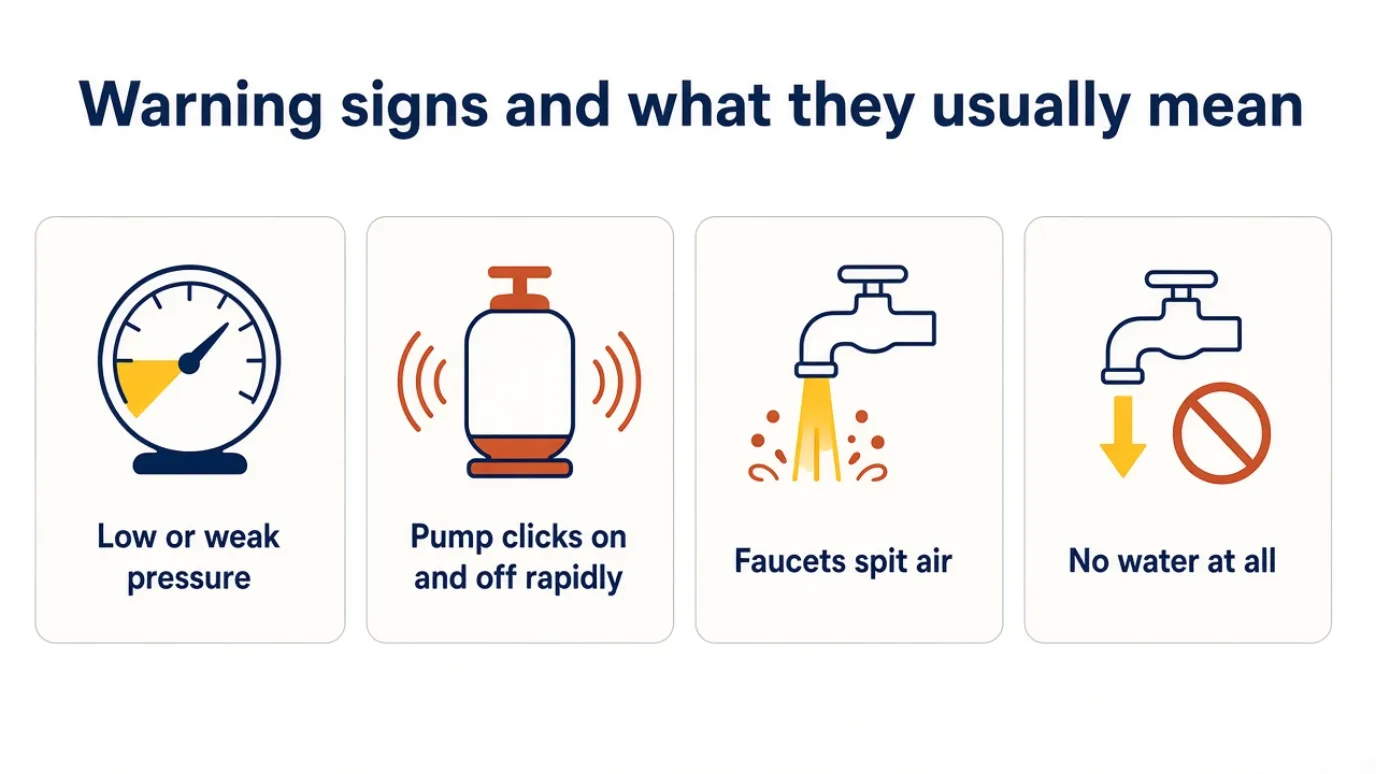
Warning signs and what they usually mean
| Sign | Likely cause | Pump or something else? |
|---|---|---|
| Low or weak pressure | Clogged sediment filter, failing pump, low water level | Check the filter first |
| Pump clicks on and off rapidly | Waterlogged pressure tank | Usually the tank |
| Faucets spit air | Low water level in the well, cracked drop pipe | Pump system |
| No water at all | Tripped breaker, failed pressure switch, dead pump | Check power first |
| Pump runs nonstop | Leak in the system, failing pump | Could be either |
| Cloudy or sandy water | Pump set too low, failing well screen | Pump and well |
| High electric bill | Pump running too long or cycling | System issue |
Why it matters here: Western Monmouth towns like Millstone, Colts Neck, Upper Freehold, and parts of Freehold Township and Manalapan have many homes on private wells. When the pump fails, the whole house loses water, so it pays to know the early signs.
Short cycling: the most common problem
Short cycling is when the pump turns on and off every few seconds while water runs. It almost always points to the pressure tank.
The tank holds a cushion of air. That cushion lets you draw water without starting the pump every time. When the air bladder fails, the tank fills with water (“waterlogged”) and the pump starts and stops constantly. That wears the pump out fast.
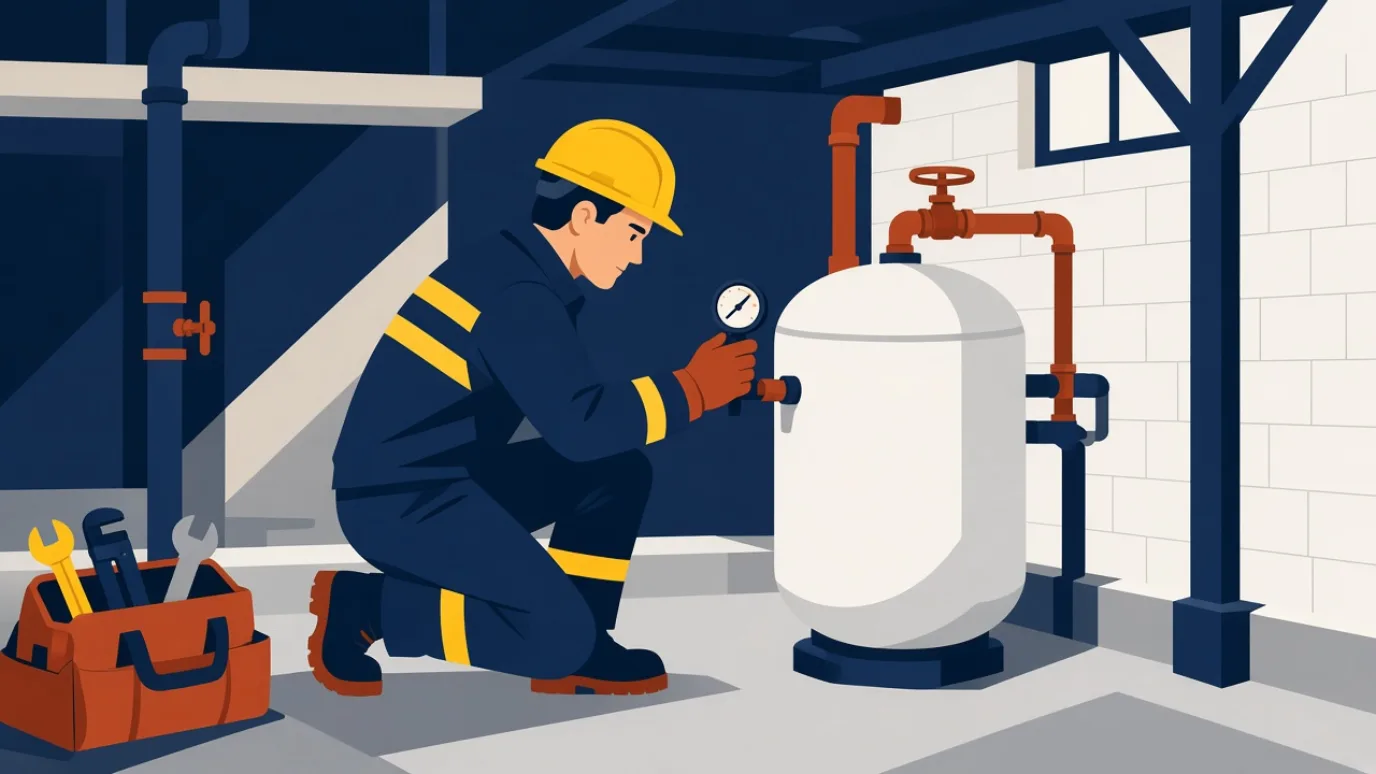
Simple test: tap the tank. A tank that sounds full of water from top to bottom is likely waterlogged.
Other parts that fail before the pump
Pressure switch. A small box on the pipe near the tank. Burned contacts or a clogged sensing tube cause no water or erratic pressure.
Control box. On some three-wire pumps, a control box in the basement holds a capacitor. A bad capacitor can stop the pump from starting.
Check valve. If it leaks, water drains back down the well and the pump has to work harder.
Sediment filter. A clogged filter feels just like a weak pump.
Trusty tip: Turn off power to the pump before you touch the switch or control box. Both carry line voltage.
Signs the pump itself is failing
- The pump runs but delivers little or no water.
- You hear it running constantly with no water in use.
- The breaker trips when the pump starts.
- Sand or sediment suddenly shows up in the water.
- The pump is old and the problems are getting worse.
Submersible pumps sit deep in the well, so replacing one means pulling the pipe and wire. That is why replacement costs more than tank or switch repairs.
What replacement costs
| Item | National figure |
|---|---|
| Well pump replacement range | $973–$2,822 |
| National average | $1,897 |
Depth, pump size, and whether wiring or pipe also needs replacing drive the final price. Pump and well drilling work in New Jersey is done by licensed well drillers and pump installers.
Water quality after pump work
Any time a well is opened for pump work, bacteria can get in. Ask whether the system will be disinfected afterward, and test the water once it is back in service.
EPA notes that private well owners are responsible for testing and maintaining their own wells. New Jersey also requires testing at sale under the Private Well Testing Act. If you plan to sell, budget time for that test.
Keep the system healthy
- Test your water every year.
- Check the pressure tank’s air charge every year or two.
- Replace sediment filters on schedule.
- Keep the wellhead cap sealed and above grade.
- Note your normal pressure range so you notice changes.
Hard water is common in wells. If you see white scale on fixtures, read our guide on water softeners vs whole-house filters.
How we can help
The pump and well itself are work for a licensed well contractor. We help with what happens inside the house: repairing pressure tank connections, fixing leaks that make the pump run, installing filters, and repairing water damage. See our plumbing services or call (848) 272-9900 to talk through your symptoms. For the line between the well and the house, read our water line replacement guide for Freehold. Our Freehold plumber guide explains what local plumbing visits cost.
See our Freehold service area page and our winter home maintenance tips.
Frequently Asked Questions
How do I know if my well pump is going bad?
Watch for low pressure, sputtering faucets, a pump that runs constantly, sediment in the water, and a jump in your electric bill.
Why does my well pump keep turning on and off?
Rapid cycling usually means a waterlogged pressure tank. A bad pressure switch can also cause it.
How much does it cost to replace a well pump?
Angi’s national range is $973–$2,822, with an average near $1,897.
Do I need to test my well when selling a house in NJ?
Yes. New Jersey’s Private Well Testing Act requires testing when a home with a private well is sold.
Can a pressure tank cause low water pressure?
Yes. A failed tank or wrong air charge can cause weak, uneven pressure.