Key Takeaways
- First figure out which kind you have. Electric baseboards have their own thermostat and breaker. Hot water (hydronic) baseboards are fed by a boiler.
- On electric units, most “dead heater” calls come down to the thermostat, a tripped breaker, or a tripped high-limit switch.
- Cadet, a major heater maker, says a tripped manual reset usually means the heater needs to be cleaned or is blocked.
- On hot water baseboards, trapped air and a stuck zone valve are the usual suspects when one room stays cold.
- Turn off power at the breaker before you touch an electric baseboard. Most run on 240 volts.
A baseboard heater not working is usually a control problem, not a dead heater. Electric units most often fail at the thermostat, breaker, or overheat switch. Hot water units most often have air in the loop or a zone that is not opening. Start by identifying which type you have.
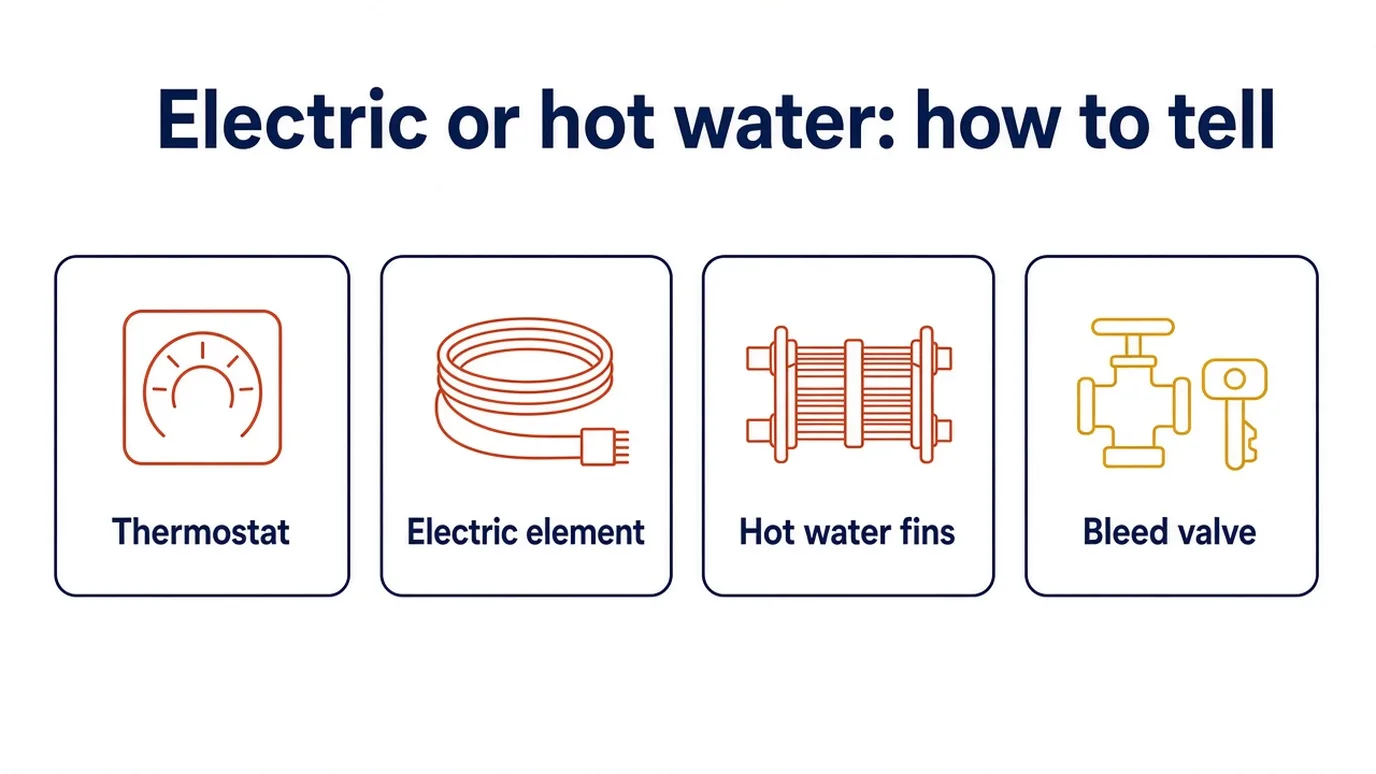
Electric or hot water: how to tell
| Clue | Electric baseboard | Hot water (hydronic) baseboard |
|---|---|---|
| Thermostat | On the wall or built into the unit, often per room | Usually one per zone, tied to a boiler |
| Inside the cover | Heating element, wires at one end | Copper pipe with aluminum fins |
| Bleed valve | None | Small screw or key valve at one end |
| Heats up | Fast, gets hot right away | Slower, stays warm after shutting off |
| Common failure | Thermostat, breaker, high-limit | Air in pipes, zone valve, circulator |
Why it matters here: many Monmouth County homes built in the 1960s through 1980s have hot water baseboard from an oil or gas boiler. Electric baseboard is common in additions, finished basements, and shore cottages. Some homes have both.
Electric baseboard: check these in order
1. The thermostat. Turn it well above room temperature and wait a few minutes. Line-voltage thermostats wear out, and a clicking sound with no heat often means the thermostat contacts have failed.
2. The breaker. Electric baseboards usually sit on a double-pole breaker. A breaker can look on when it is actually tripped. Switch it fully off, then back on.
3. The high-limit switch. This safety switch shuts the heater off if it overheats. Furniture, curtains, or dust against the fins can trip it. Cadet notes that if the reset keeps tripping, the heater probably needs to be cleaned or is blocked.
4. Voltage mismatch. Cadet warns that a 240-volt heater on a 120-volt circuit gets only 25% of its rated wattage. That shows up as a heater that “works” but barely warms the room, often after a DIY swap.
Trusty tip: if one heater on a shared thermostat works and the other does not, the dead one usually has a failed element or a loose wire at its junction. That is a job for a pro with a meter.
Hot water baseboard: check these in order
1. Is the boiler running? If every zone is cold, the problem is at the boiler, not the baseboard. Our boiler repair and replacement guide covers what comes next.
2. Air in the loop. Gurgling, or heat that stops partway along a run, points to trapped air. Bleeding the valve at the high point of the run lets it out. Stop when a steady stream of water comes through.
3. The zone valve or circulator. If one zone stays cold while others heat, its zone valve may be stuck closed or its circulator pump may have failed. Feel the supply pipe near the boiler. If it stays cold when the thermostat calls for heat, that zone is not opening.
4. Blocked fins. Bent or dusty fins and furniture against the cover cut heat output a lot. Vacuum the fins gently and give the unit a few inches of clearance.
Trusty tip: keep a towel and a small cup under the bleed valve. Hot water comes out fast once the air clears.
Safety first
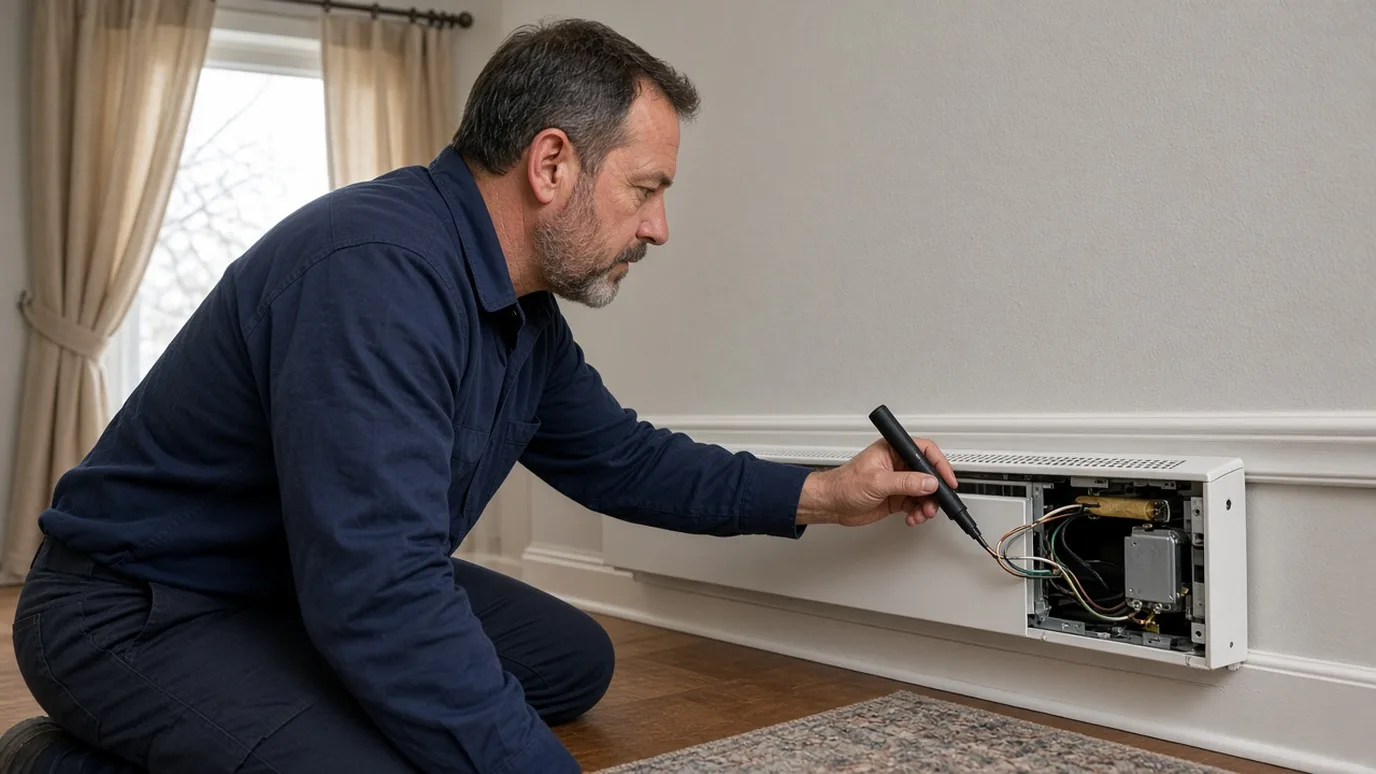
- Shut off the breaker before opening an electric baseboard cover.
- Do not run an electric baseboard with drapes or bedding touching it.
- Never bypass a high-limit switch to “make it work.”
- If you smell burning or see scorched paint near the heater, shut it off and call.
This matters in a NJ winter. The NFPA reports that heating equipment was involved in an estimated 37,365 home fires a year from 2020 to 2024, and 46% of those fires happened from December through February. If you are filling the gap with a space heater while you wait on a repair, read our portable heater safety tips.
The same goes for portable space heaters people bring out when the baseboard quits. Our guide on using portable heaters safely covers the rules.
Repair or replace?
Cadet says baseboard heaters often last more than 20 years. So a single failure does not mean the heater is done. A new thermostat or cleaning fixes many units.
Angi rates replacing a baseboard heater a challenging DIY project because of the electrical work. Replacement makes sense when the element is burned out, the housing is rusted or bent, or the heater is too small for the room. If you are pricing that out, read our baseboard heater replacement cost guide.
Why it matters here: Monmouth County winters bring weeks of freezing nights. A room with a dead heater on an outside wall can let nearby pipes freeze, so do not leave a cold room unchecked for long.
When to call
Call a pro when the breaker trips again right after reset, when the high-limit keeps tripping after cleaning, or when a hot water zone stays cold after bleeding. Those point to wiring, element, or valve problems.
We troubleshoot electric baseboard heaters, replace thermostats, and handle wiring repairs across Monmouth County, and we bring in a heating contractor when the boiler side needs one. See our electrical services or call (848) 272-9900. For other cold-weather fixes, our winter home maintenance tips are a good checklist.
Frequently Asked Questions
Why would an electric baseboard heater stop working?
The most common causes are a failed thermostat, a tripped double-pole breaker, or a tripped high-limit switch from blocked airflow. Less often, the heating element burns out or a wire comes loose at the junction box.
Do baseboard heaters have a reset button?
Many electric baseboards have a high-limit switch that resets itself or has a manual reset. If it keeps tripping, Cadet says the heater probably needs cleaning or is blocked. Hot water baseboards do not have a reset. Their controls are at the boiler.
Should baseboard heaters be hot to the touch?
Electric baseboard covers get hot, which is why furniture and fabric need to stay clear. Hot water baseboards run warm to hot depending on boiler temperature. A cold unit with the thermostat calling for heat is a sign of trouble.
Why is my baseboard heat not working upstairs?
On hot water systems, upstairs runs are the most likely to trap air because air rises to the high point. Bleeding the upstairs baseboards usually helps. If not, check that upstairs zone’s valve or circulator.
How long do baseboard heaters last?
Cadet says baseboard heaters often last more than 20 years. Thermostats and limit switches usually fail before the heater body does.