Key Takeaways
- Fixr’s 2026 national data puts main water line replacement at $1,500–$12,000, with an average near $3,750.
- Per-foot pricing runs about $75–$225 per linear foot, with most homeowners paying $100–$200 per foot.
- Low pressure across the whole house, rising bills with no visible leak, or a soggy strip of lawn are the classic signs of a failing service line.
- Older Freehold homes may still have galvanized steel or even lead service lines. EPA explains that lead service lines are a significant source of lead in drinking water where they exist.
- Service line replacement is permitted plumbing work in New Jersey, not ordinary maintenance.
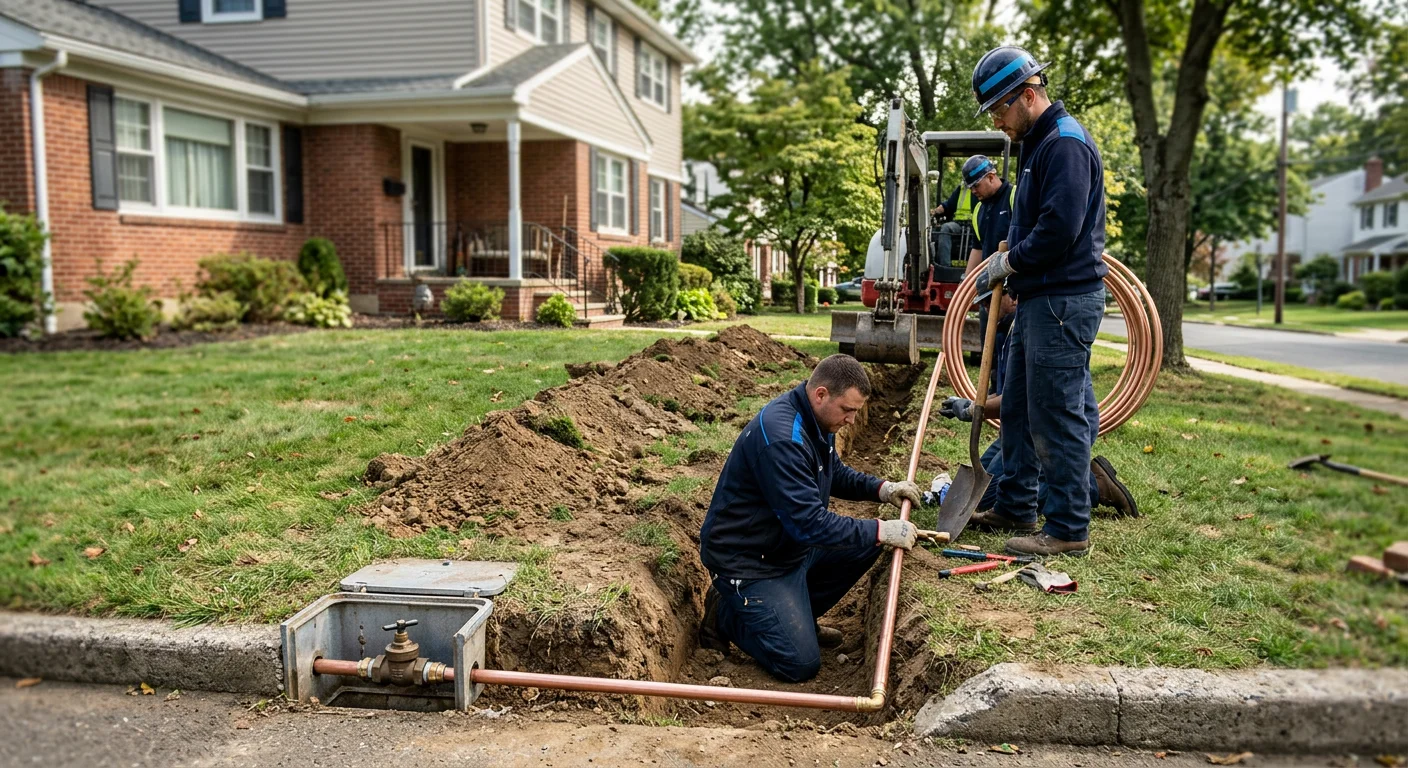
Water line replacement in Freehold usually means replacing the buried service pipe between the curb stop or meter and the house. Most jobs fall within Fixr’s national band, but length, depth, pipe material, and what sits on top of the trench move the final price.
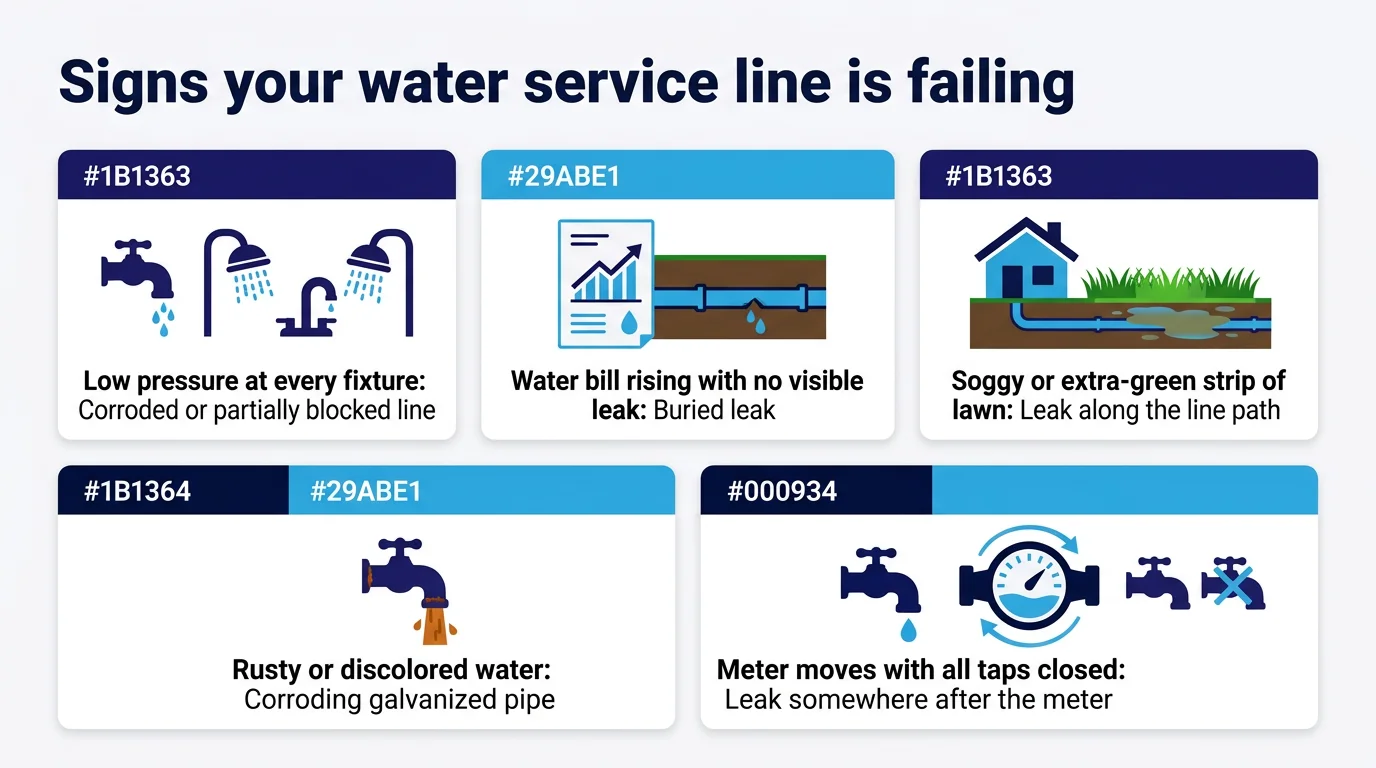
Signs your water service line is failing
The water service line is the pressurized pipe that brings drinking water from the municipal main (through the curb stop and meter) into your home.
| Sign | What it suggests |
|---|---|
| Low pressure at every fixture | Corroded or partially blocked line |
| Water bill rising with no visible leak | Buried leak |
| Soggy or extra-green strip of lawn | Leak along the line path |
| Rusty or discolored water | Corroding galvanized pipe |
| Meter moves with all taps closed | Leak somewhere after the meter |
A quick test: turn off every faucet and appliance, then watch the meter for 15 minutes. If it moves, you have a leak. Then figure out whether it’s inside the house or on the service line.
Why Freehold homes need service line work
Freehold Borough has many homes built well before the 1970s, and parts of Freehold Township saw large building waves in later decades. Older homes are more likely to have galvanized steel lines that corrode from the inside, narrowing until pressure drops.
Some very old homes may also have lead service lines. EPA’s lead service line page explains that lead pipes can leach lead into drinking water and that replacing the full service line is the most effective fix.
Why it matters here: If your home is older and you don’t know what the service line is made of, find out. Scratch the pipe where it enters the house: shiny silver and soft suggests lead, gray and magnetic suggests galvanized, orange suggests copper.
Water line replacement cost breakdown
| Length | Fixr installed range |
|---|---|
| 10 feet | $750–$2,250 |
| 25 feet | $1,875–$5,625 |
| 50 feet | $3,750–$11,250 |
Fixr’s low-end example is about $1,125 for a short 10-foot line. Its high-end example reaches about $22,500 on larger, more complex jobs.
What moves a Freehold quote:
- Length. Set-back homes on larger Freehold Township lots have longer runs.
- Depth. NJ frost depth means lines sit deep enough to avoid freezing.
- Material. Copper costs more than PEX or HDPE.
- Method. Trenchless methods avoid digging up driveways and landscaping.
- Surface restoration. Driveways, walks, and mature landscaping add cost.
- Permit and inspection. Required for service line work.
Trenchless vs open trench
| Method | Best for | Trade-off |
|---|---|---|
| Open trench | Short runs, open lawn | Disrupts yard along the full path |
| Trenchless (pull or bore) | Under driveways, walks, trees | Needs access pits; not every soil or path suits it |
Trusty tip: if the line runs under a driveway or mature trees, ask for a trenchless quote alongside the trench quote. The per-foot price may look similar, but restoration costs often decide the winner.
The replacement process, step by step
- Diagnose. Confirm the leak or failure is on the service line, not inside the house.
- Locate utilities. NJ requires a utility markout before digging.
- Permit. File the plumbing permit through the local construction office.
- Coordinate with the water utility. The curb stop or meter may need the utility’s involvement.
- Excavate or bore. Open trench or trenchless access pits.
- Install new line. Copper, PEX, or HDPE per local rules.
- Inspect and test. The plumbing inspector checks the work before backfill.
- Restore. Backfill, compact, and restore the lawn or hardscape.
New Jersey’s Uniform Construction Code requires a construction permit for plumbing alterations, apart from ordinary maintenance. The state’s code guidance treats replacement of existing piping as minor work or a full permit, not a no-permit repair.
Plan for the inside of the house too
New service lines sometimes reveal problems downstream. Higher pressure can stress old valves and supply lines. Corroded galvanized pipe inside the house may also need attention.
Ask the plumber to check the main shutoff valve and pressure after the new line goes in. A new shutoff is a small add-on that makes future emergencies easier to handle.
Water heaters also benefit from a check. Sediment that loosens after a line change can affect performance. Our water heater repair visits cover valves and supply connections.
For how plumbing work is priced across the area, see what drives a Monmouth County plumbing bill. Freehold homeowners can also read our Freehold plumber guide. Slow or recurring clogs are a different issue; our drain cleaning service covers those.
After the new line is in: pressure and fixtures
A new service line can raise water pressure if the old pipe was heavily scaled. That is good for showers and laundry, but it can stress older valves, hoses, and toilet fill valves.
Check for:
- Drips at supply connections under sinks and toilets
- A toilet that fills and shuts off differently than before
- A washing machine hose that looks bulged or cracked
Fix those small parts on the same visit if you can. It is cheaper than a second emergency call.
Also confirm the main shutoff works smoothly. A stuck or frozen valve is a problem you don’t want to discover during a burst.
Temporary water and what to expect on project day
Ask how long the water will be off. A short trenchless pull may take a few hours. A full dig with inspection can take most of a day.
Fill pitchers and jugs the night before. Plan for baths and laundry after the inspector signs off. Keep pets away from open pits.
If the trench crosses a walkway you need every day, ask for temporary plating or a shorter path when possible. That detail belongs in the quote, not as a surprise on the day.
Don’t ignore a slow leak
A buried leak can run for months, raising the bill and softening soil near the foundation. EPA WaterSense estimates the average family can waste 9,400 gallons a year from household leaks.
If the trench work tears up a patio or walk, plan the restoration as part of the job. We also handle the finish side, like drywall and paint touch-ups, when a leak has reached interior walls.
If you suspect a service line leak, call or text 848-272-9900. Describe the symptoms and the age of the home, and we’ll tell you whether it needs a camera, a meter test, or a licensed plumber for replacement.
Frequently Asked Questions
How much does a plumber charge to replace a water line?
Fixr’s 2026 national range is $1,500–$12,000, averaging about $3,750. Per-foot pricing typically runs $75–$225. Length, depth, material, and restoration move the final price.
How often should water supply lines be replaced?
It depends on material. Galvanized steel corrodes and often needs replacement on older homes. Copper and modern plastics last much longer. Replace any lead service line.
Do plumbers replace water lines?
Yes. Service line replacement is licensed plumbing work in New Jersey and needs a permit and inspection.
Who is responsible for the water line, me or the town?
Usually the homeowner owns the line from the curb stop to the house, and the utility owns the main and the curb side. Check with your water provider for the exact split.