
Key Takeaways
- Repair if the damage is limited to a few boards, a stair, or a section of railing and the posts, joists, and ledger are sound.
- Replace if the structure itself is rotting: soft joists, a failing ledger board, or posts that move.
- Fixr puts typical deck repair at $500–$3,000, with a national average near $1,500.
- Single parts: posts run about $200–$400 each and railings about $50–$250 per linear foot.
- Fix structural problems before snow loads arrive. Snow and ice add weight to a deck that may already be weak.
The fall is the right time to decide whether your deck needs a repair or a replacement. Check the structure first: posts, joists, beams, and the ledger board where the deck meets the house. If those are solid, you can usually repair the surface. If they are soft or loose, plan for replacement. Here is a ten-minute check you can do this weekend.
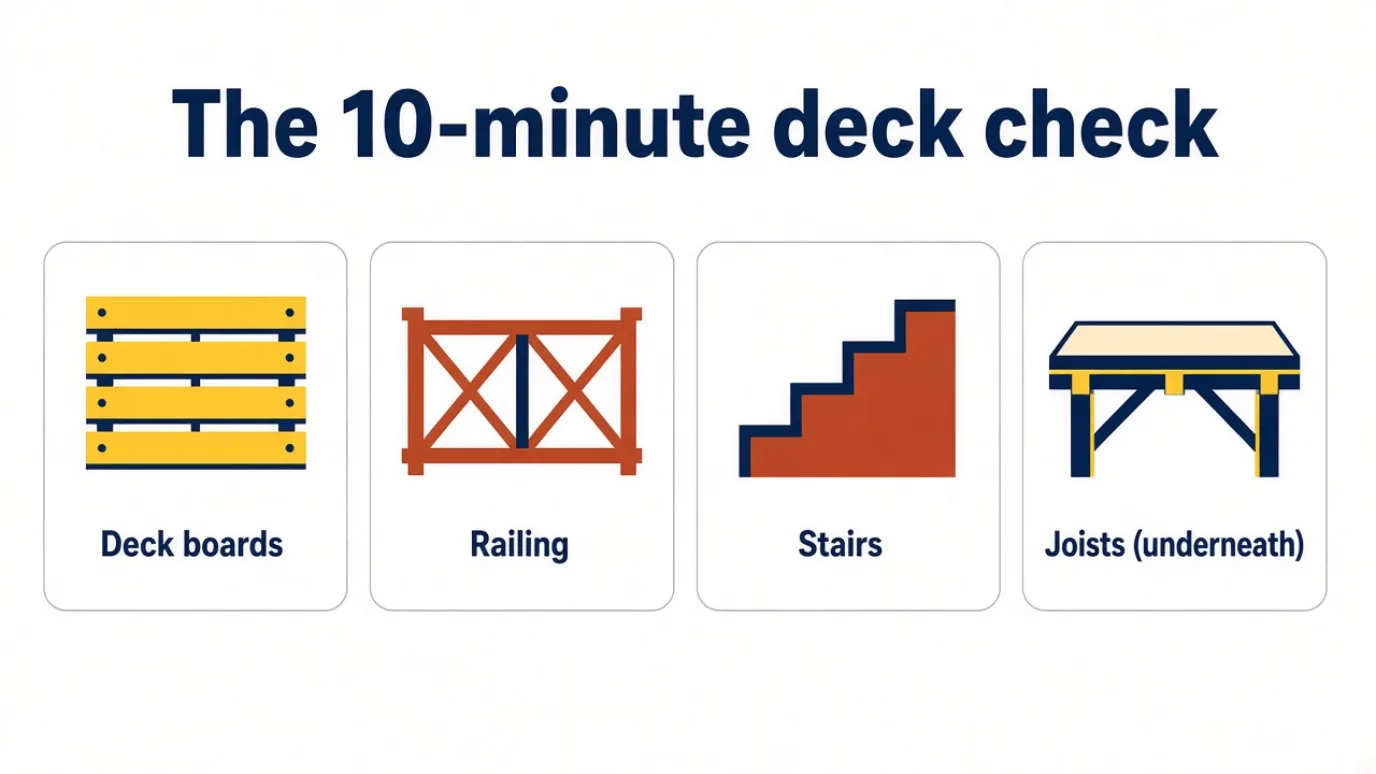
The 10-minute deck check
Take a flathead screwdriver and a flashlight.
| Check | What to look for | Repair or replace signal |
|---|---|---|
| Deck boards | Soft spots, splits, popped nails | A few bad boards: repair |
| Railing | Wobble when pushed, loose posts | Loose rail: repair. Rotten posts: replace section |
| Stairs | Cracked treads, loose stringers | Usually repair |
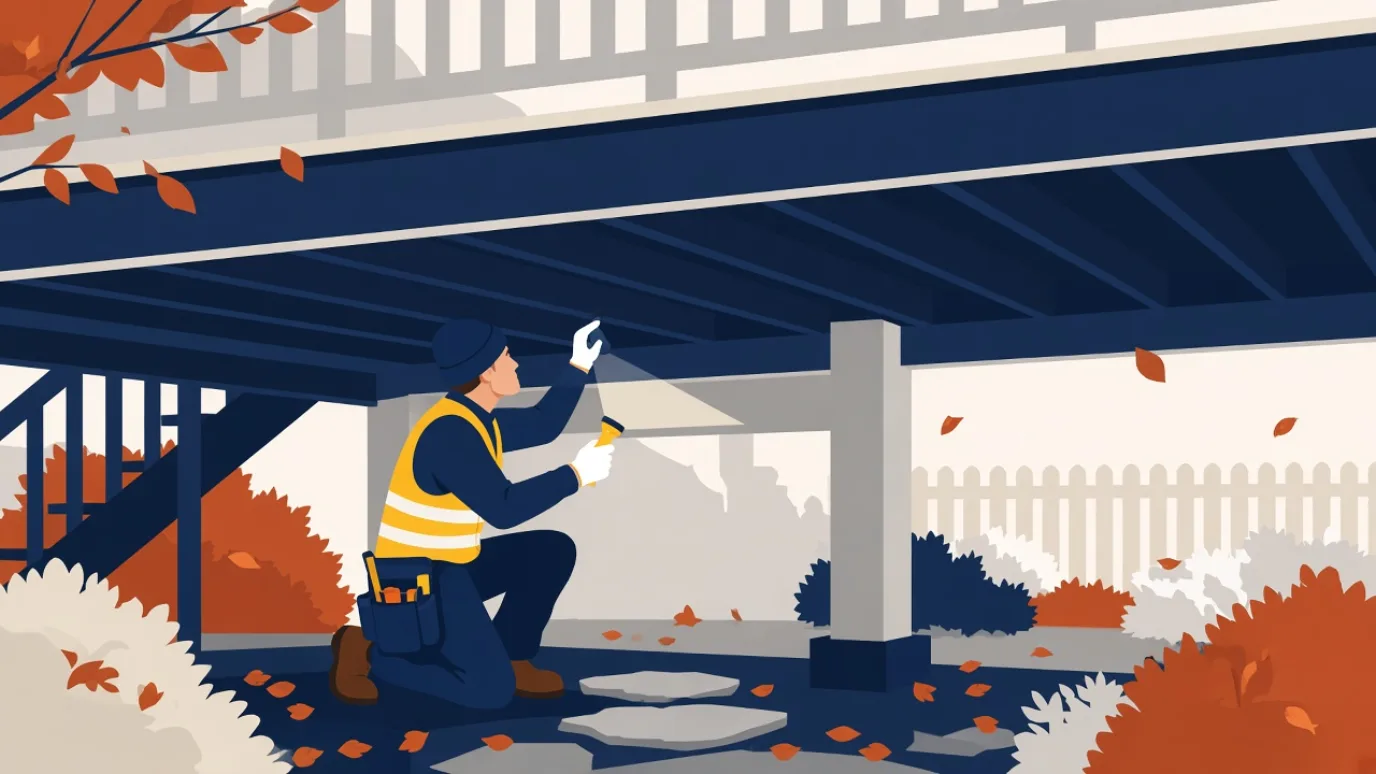
| Joists (underneath) | Screwdriver sinks in, dark staining | Several soft joists: replace |
| Ledger board | Gaps, rust, rot where it meets the house | Rotten ledger: replace |
| Posts and footings | Rot at the base, leaning, sinking | Replace posts or rebuild |
| Fasteners | Rusted nails, missing bolts, corroded hangers | Repair if wood is sound |
Why it matters here: Monmouth County decks take salt air near the shore, wet springs, and freeze-thaw cycles all winter. Corroded hangers and rotten post bases are the two problems we see most often in older shore-area decks.
Signs you can repair
- A handful of cracked or soft boards
- Popped nails or loose screws
- A wobbly stair tread
- A loose section of railing with solid posts
- Faded or gray wood that needs cleaning and sealing
These are surface problems. Fixing them before winter keeps water from getting into the structure.
Signs it is time to replace
- Joists that a screwdriver sinks into easily
- A ledger board that is rotting or pulling away from the house
- Posts that lean, move, or are rotted at the base
- Widespread soft boards across the whole deck
- A deck that bounces or sways when you walk on it
Trusty tip: The ledger board is the most important part to check. Most dangerous deck collapses start where the deck attaches to the house. If you see rot or rust there, stay off the deck until it is checked.
What repairs cost
| Repair | Fixr national range |
|---|---|
| Typical deck repair project | $500–$3,000 |
| Replace a post | $200–$400 each |
| Replace railing | $50–$250 per linear foot |
| Replace steps | $30–$60 each |
Fixr notes a well-kept wood deck lasts around 20 years and can last longer with good care. If yours is near that age and the structure is soft, replacement usually beats patching.
Before winter: what to do now
Fix structural issues first. Snow and ice add weight. A weak ledger or rotten post is a risk with a load on it.
Clear debris. Leaves trapped between boards hold water and cause rot.
Check flashing at the ledger. Water getting behind the ledger is a common cause of rot.
Seal or stain if needed. Sealing protects wood from water. Most sealers need a dry, mild stretch of weather, so do it in early fall.
Plan snow removal. Use a plastic shovel and push along the boards. Do not use rock salt on wood decks. It is hard on wood and on metal fasteners.
Lead paint on older painted decks
Some older porches and decks were painted with lead paint. If your home was built before 1978 and the deck has old paint, scraping or sanding can create lead dust. Contractors must follow EPA’s lead-safe work rules when disturbing it.
Permits
New Jersey’s construction code treats minor repairs as maintenance. Replacing a deck, or major structural work, usually needs a permit. The state’s UCC overview explains the difference. Your local building office can confirm.
Wood or composite for the rebuild?
If you replace, think about the next 20 years. Composite costs more upfront but needs less maintenance. Wood costs less and is easier to repair. Our composite vs wood deck comparison breaks down both. For shore homes, read our coastal deck inspection guide.
Get your deck checked
We inspect and repair decks across Monmouth County: boards, stairs, railings, posts, and ledgers. We will tell you honestly whether a repair makes sense or whether you are better off rebuilding. See our deck repair service or call (848) 272-9900 to book a pre-winter check. If your deck needs a refresh rather than repair, see our deck restoration and staining guide.
For the rest of the house, read our winter home maintenance tips and small winter repairs that prevent big damage.
Frequently Asked Questions
How do I know if my deck needs to be replaced?
Check the joists, posts, and ledger board. If they are soft, rotted, or moving, replacement is usually the better choice.
How much does deck repair cost?
Fixr’s national range is $500–$3,000, with an average around $1,500.
Can you repair a deck in the fall?
Yes. Fall is a good time. Fix structural issues and seal on a dry day before temperatures drop.
How long do wood decks last?
Fixr says about 20 years, and longer with good maintenance.
Is it safe to leave snow on a deck?
Light snow is usually fine on a sound deck. Heavy, wet snow on a weak deck is a risk. Clear it with a plastic shovel.