
Key Takeaways
- A gurgling drain when another fixture runs, sewage odor in the basement, or backups at the lowest fixture point to the lateral, not a single clog.
- Camera inspection decides the repair. Without it, you are choosing between spot repair, lining, bursting, or a full dig on a guess.
- If a line failure soaks finishes, national water damage restoration averages about $3,000, with most jobs between $1,200 and $5,000.
- Fair Haven’s mature trees and older riverside homes make root intrusion one of the most common lateral failures.
- New Jersey’s code separates clearing stoppages (ordinary maintenance) from replacing piping, which needs a permit.
Sewer line repair in Fair Haven usually starts with a symptom you can hear or smell: a toilet that gurgles when the washer drains, or a basement floor drain that backs up after a storm. The fix depends on what a camera finds, so diagnose before anyone digs.
Symptoms that point past a simple clog
A sewer lateral is the private pipe that carries wastewater from your house to the municipal sewer main. When it fails, the symptoms show up at more than one fixture.
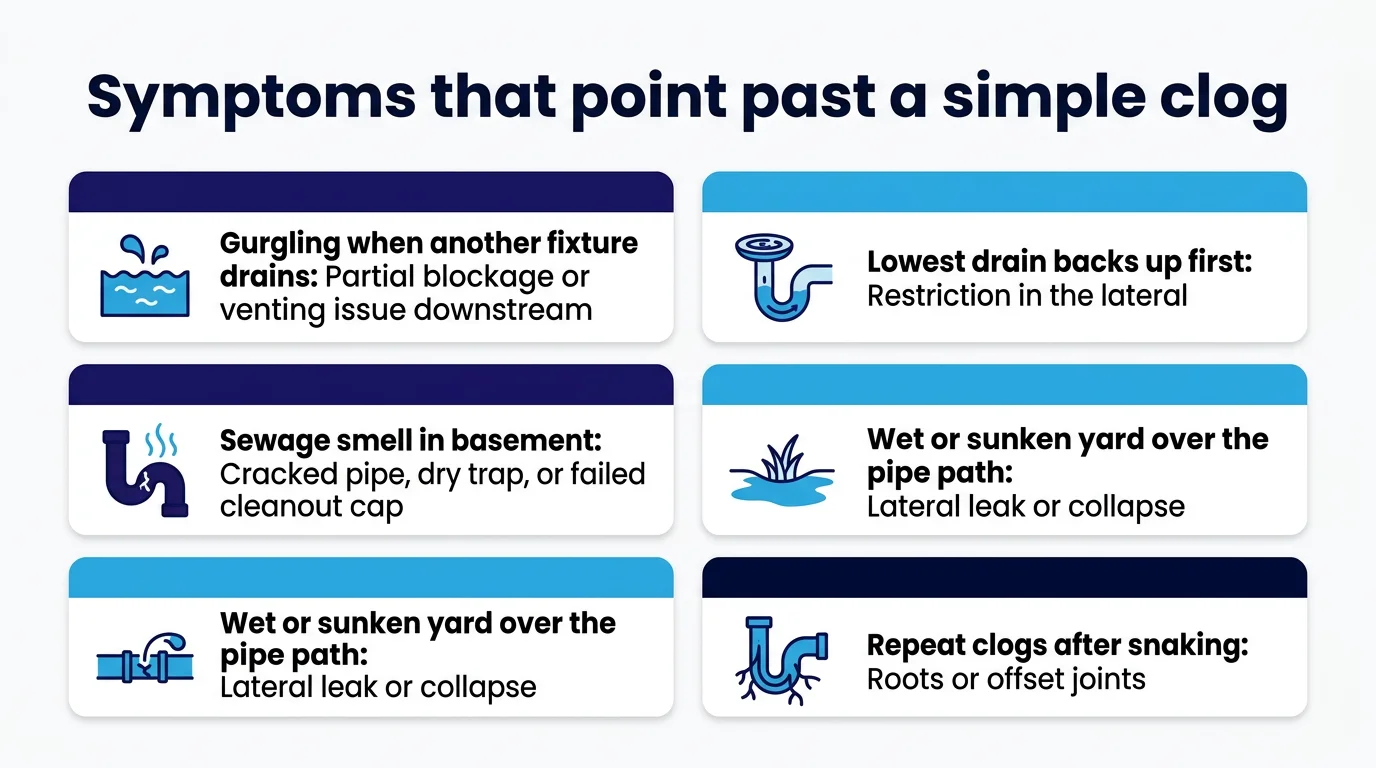
| Symptom | What it usually means |
|---|---|
| Gurgling when another fixture drains | Partial blockage or venting issue downstream |
| Lowest drain backs up first | Restriction in the lateral |
| Sewage smell in basement | Cracked pipe, dry trap, or failed cleanout cap |
| Wet or sunken yard over the pipe path | Lateral leak or collapse |
| Repeat clogs after snaking | Roots or offset joints |
If one sink is slow and everything else drains, start with that fixture. If two or more fixtures act up together, think lateral.
Why Fair Haven laterals fail
Fair Haven has many homes built before modern PVC laterals were standard. Older clay and cast-iron pipes have joints that roots can find.
The borough’s tree-lined streets are a big part of its appeal. They also mean large root systems near sewer paths. Roots enter through tiny gaps at joints, then grow into dense mats that catch paper and grease.
Riverside lots near the Navesink also deal with high groundwater after heavy rain. That can stress older pipes and make surcharging worse during storms.
We see the same pattern often: snaking clears the line for a few months, then the backup comes back. That is a root problem a camera will show plainly.
Camera first, then choose the method
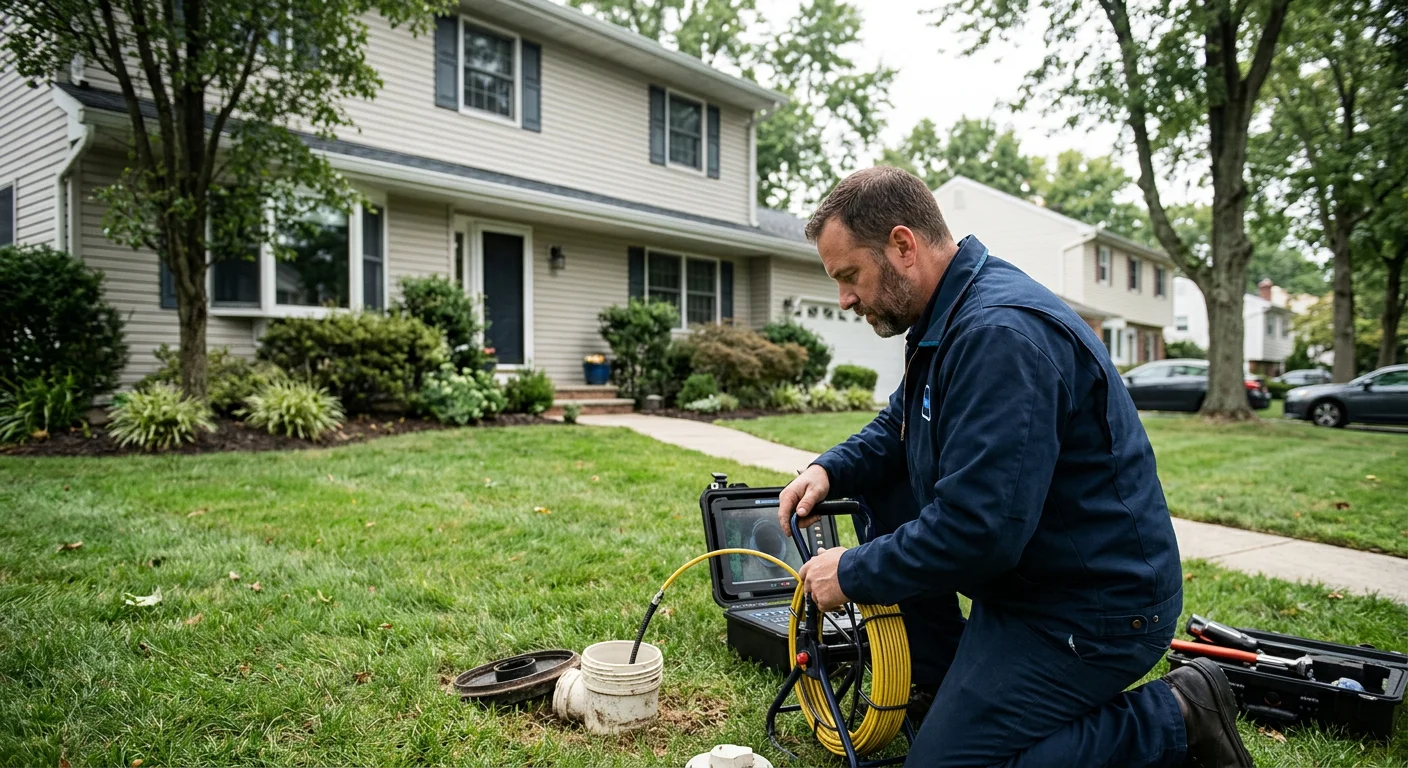
A sewer camera inspection runs a waterproof camera through a cleanout to record the inside of the pipe. It shows roots, cracks, offsets, sags, and collapses, plus the distance from the cleanout.
From that video, the repair options become clear:
Spot repair. Dig and replace one damaged section. Best when the rest of the line is sound.
Pipe lining. A resin liner cures inside the old pipe. Good for cracks and root entry when the pipe still holds its shape.
Pipe bursting. A new pipe is pulled through while the old one is split apart. Works on many failed lines without a full trench.
Open-trench replacement. Dig the full run. Needed for collapsed pipe, bad slope, or sags that hold water.
| Method | Strength | Limitation |
|---|---|---|
| Spot repair | Lowest disruption for one defect | Doesn’t fix the rest of an old line |
| Lining | Little digging | Can’t fix collapse or sags |
| Bursting | Replaces line through small pits | Needs room and clear path |
| Open trench | Fixes slope and collapse | Most yard and driveway disruption |
Trusty tip: get the camera video and ask the contractor to explain the defect by distance. If they can’t show you the problem on screen, get a second opinion.
What drives sewer repair cost in Fair Haven
National sewer cost pages vary widely, and many quote different scopes. The numbers that move a Fair Haven quote most are:
- Length of the run from house to main
- Depth of the pipe
- Driveway, walkway, or landscaping in the way
- Access to a usable cleanout
- Permit and inspection requirements
- Whether the defect is one spot or the whole line
Surface restoration often costs as much as the pipe work on finished lots. That is where trenchless methods can save money, even if their per-foot price is not lower.
The damage side has clearer national numbers. Fixr puts water damage restoration at $1,200–$5,000 for typical jobs, and a moderate burst pipe repair inside the house at about $500. Acting early keeps the bill closer to the repair than to the restoration.
Permits for sewer work in New Jersey
New Jersey’s Uniform Construction Code requires construction permits for plumbing alterations, with exceptions for ordinary maintenance and routine repair.
The state’s Construction Code Communicator lists ordinary plumbing maintenance items that need no permit filing, such as clearance of stoppages and like-for-like fixture swaps. Replacing piping falls under minor work or a full permit.
Why it matters here: Clearing a root clog is usually no-permit work. Replacing a section of lateral usually needs a plumbing permit and inspection through the borough. Your contractor should tell you which before the work starts.
Small leaks upstream add up
Not every sewer complaint is a lateral. Running toilets and dripping fixtures send a steady trickle down the line and raise the water bill.
EPA WaterSense estimates the average family can waste 9,400 gallons of water a year from household leaks. A toilet that runs between flushes is one of the most common sources. Fixing a flapper is a small job that removes a constant load from both the supply and the drain side.
Why it matters here: Before you blame the lateral for high bills, rule out fixture leaks with a dye tablet in the toilet tank and a quick meter check with every tap off.
What to ask before you sign a sewer quote
A clear quote protects you from surprise change orders. Ask:
- What did the camera show, and at what distance from the cleanout?
- Which repair method, and why not the alternatives?
- Is the permit and inspection included?
- Who restores the lawn, walk, or driveway, and to what standard?
- What warranty covers the new pipe or liner?
If the answers are vague, ask to see the camera footage again. A good contractor will walk you through it.
Prevent the next backup
- Run a camera every few years if you have older clay pipe and big trees.
- Keep grease, wipes, and paper towels out of drains.
- Know where your cleanout is and keep it accessible.
- Consider a backwater valve if storms push water back into the house.
For routine clogs inside the home, our drain cleaning service handles fixture and branch lines. For how plumbing quotes are framed across the county, see what drives a Monmouth County plumbing bill and the Freehold plumber guide.
If a backup damaged walls or ceilings, we handle the finish side too. See drywall repair and paint touch-ups. Gutters dumping water near the foundation can also mimic drainage issues; see our gutter cleaning guide.
If you’re not sure whether it’s a clog or the lateral, call or text 848-272-9900. Describe which fixtures are affected and when it happens, and we’ll tell you whether a camera inspection is the right next step.
Frequently Asked Questions
How do they fix a broken sewer line?
After a camera inspection, the line is spot-repaired, lined, burst-replaced, or fully dug and replaced. The defect type, pipe shape, and what’s above the pipe decide the method.
Do I need a permit to fix my sewer line in NJ?
Clearing a stoppage is ordinary maintenance. Replacing piping usually needs a plumbing permit under the Uniform Construction Code. Check with the borough’s construction office.
Does homeowners insurance cover sewer lines?
Often only with a service-line or sewer backup endorsement. Standard policies frequently exclude wear and roots. Read your policy and keep the camera report.
What is the average lifespan of a sewer line?
It depends on material, soil, and roots. Older clay and cast-iron lines fail sooner than modern PVC. A camera inspection tells you more than age alone.