
Key Takeaways
- Ice dams form when attic heat melts roof snow, and the water refreezes at the colder eave. Heated cables manage the symptom; attic air sealing and insulation fix the cause.
- The DOE’s building science guidance calls for a self-sealing eave membrane extending at least two feet in from the interior wall line in cold climates.
- Attic baffles keep a 2-inch air gap between insulation and the roof deck so soffit air can reach the ridge.
- Heat cables must be plugged into a GFCI-protected outdoor outlet and installed per the manufacturer’s spacing pattern.
- When ice dams have already damaged shingles, roof repairs cost far more than prevention. Fixr’s national roof replacement average is about $10,000.
Heated gutter cables can keep meltwater moving off a Monmouth County roof during freeze-thaw weeks. They work best as part of a plan that also fixes the attic heat loss causing the ice dam in the first place. Used alone, they treat the symptom.
How ice dams form
An ice dam is a ridge of ice at the roof edge that traps meltwater behind it. Attic heat melts the snow, and the water refreezes at the colder eave. This guide is about the cable itself: types, layout, power, and installation. For the causes and the attic fixes that prevent ice dams, read our ice dam prevention guide.
What heated gutter cables do
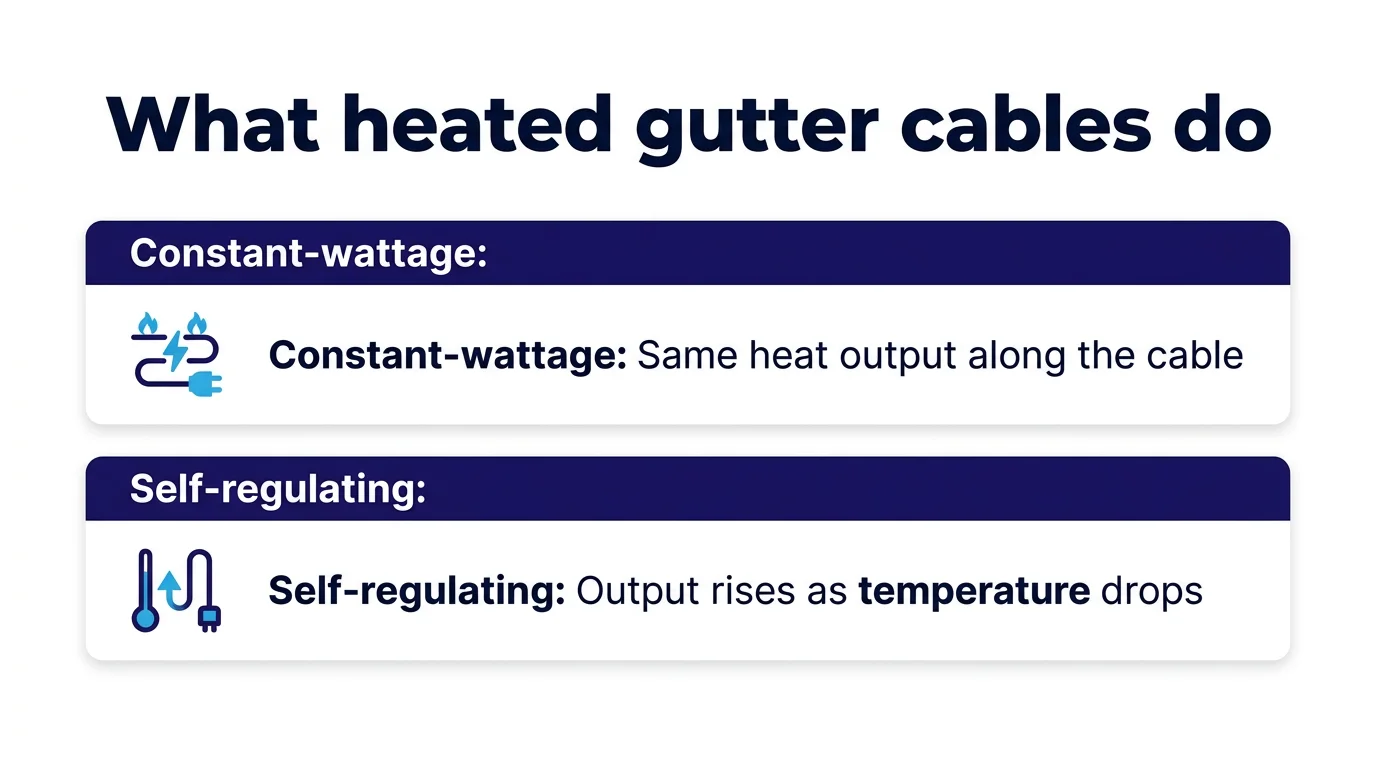
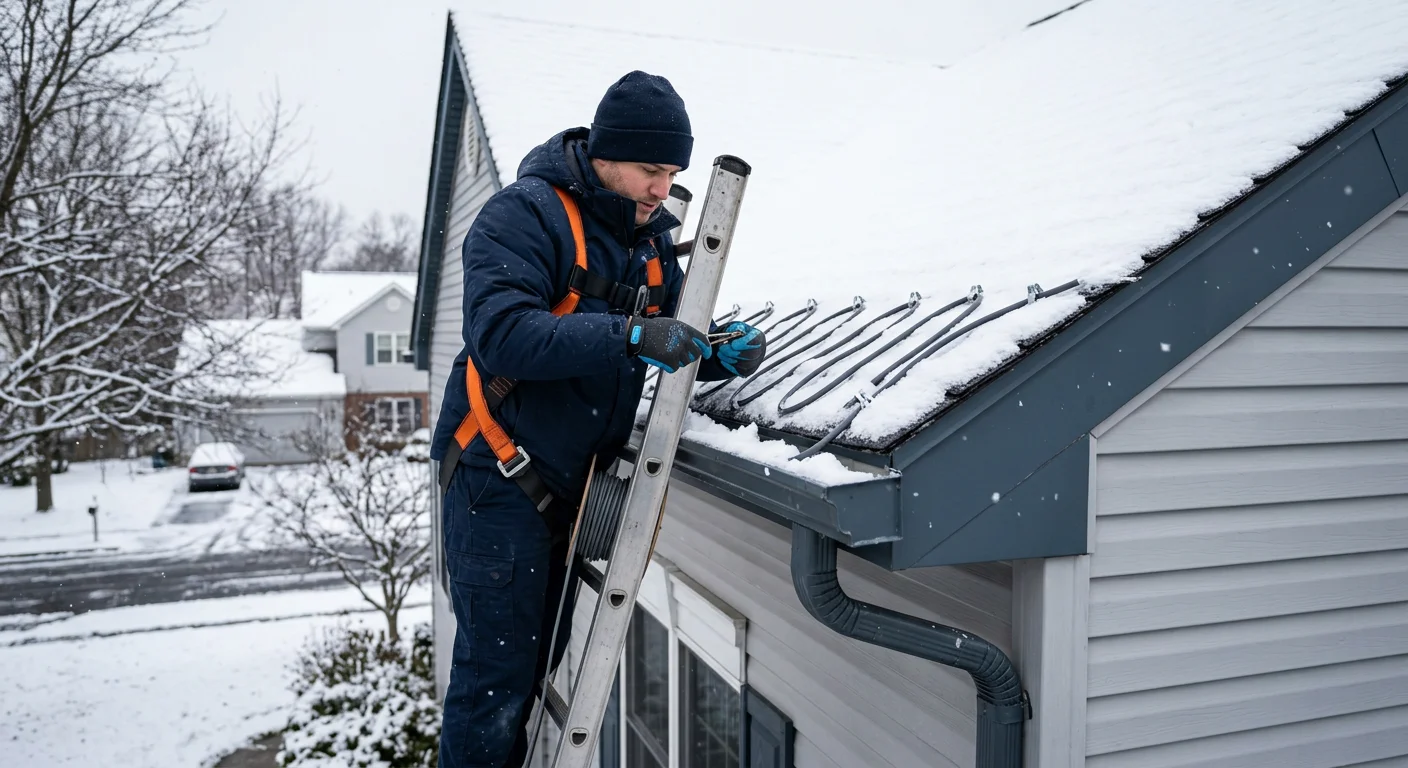
Heated cables (also called heat tape or roof de-icing cables) are electric cables laid in a zigzag pattern along the roof edge and run through gutters and downspouts. They keep channels open so meltwater can drain instead of refreezing.
| Cable type | How it works | Notes |
|---|---|---|
| Constant-wattage | Same heat output along the cable | Simpler, usually needs a thermostat or controller |
| Self-regulating | Output rises as temperature drops | More efficient, often costs more up front |
Self-regulating cable is generally the better choice for gutters. It adjusts output along its length and is less prone to overheating where it overlaps.
Cables vs fixing the attic: an honest comparison
| Approach | What it fixes | Downsides |
|---|---|---|
| Heated cables | Keeps drainage paths open | Uses electricity; treats symptom |
| Attic air sealing | Stops warm air reaching the roof deck | Labor in tight attics |
| More insulation | Cuts heat loss to the roof | Must keep soffit vents clear |
| Eave membrane | Backup barrier against leaks | Installed during reroofing |
| Ventilation fixes | Keeps roof deck cold | Needs balanced intake and exhaust |
Trusty tip: if the house has repeat ice dams every winter, put money into air sealing and insulation first. Use cables on problem spots, like valleys, north-facing eaves, and gutters over entries.
Attic fixes that prevent ice dams
DOE building science resources point to three moves that keep the roof deck cold:
- Air seal the ceiling plane. Gaps around light fixtures, chases, and attic hatches leak warm air into the attic.
- Insulate to current levels. Older Monmouth County homes often have thin or compressed attic insulation.
- Keep soffit vents open with baffles. Baffles hold a 2-inch air gap so outside air can flow from the eaves to the ridge.
When a roof is replaced, add self-sealing membrane at the eaves. The DOE guidance says it should extend at least two feet in from the interior wall line and lap over the drip edge.
Safe installation rules for heated cables
- Use cables rated for roof and gutter use, not pipe heat tape.
- Plug into a GFCI-protected outdoor outlet with an in-use cover.
- Follow the maker’s zigzag spacing and clip system.
- Run cable down the full length of downspouts so they don’t freeze shut.
- Don’t overlap cable unless the manufacturer allows it.
- Inspect cables every fall for damage from squirrels, ice, or gutter cleaning.
If you need a new exterior outlet, that is electrical work. New Jersey’s UCC requires permits for electrical work on existing buildings, apart from ordinary maintenance.
Gutters first, then cables
Heated cables can’t push meltwater through gutters packed with leaves. Clean gutters in late fall, check hangers and slope, and confirm downspouts drain away from the foundation.
Our gutter cleaning guide for Monmouth County covers what to check. If ice already damaged trim or decking at the eaves, see coastal deck inspection tips for the same rot checks that apply to fascia and porch roofs.
Signs an ice dam already caused damage
- Water stains on ceilings near exterior walls
- Peeling paint or bubbling drywall under the eaves
- Icicles forming behind gutters, not just hanging from them
- Wet insulation or frost on the underside of the roof deck in the attic
Fix the leak path before patching the ceiling. We handle the interior side, including drywall repair and paint touch-ups, once the water source is stopped. For trim and fascia carpentry, see our custom carpentry cost guide.
Where cables earn their keep on Monmouth County houses
Some roof shapes build ice dams no matter how good the attic is. Those are the spots where cables pay off.
Valleys. Two roof planes meet and funnel meltwater into one channel. Ice forms fast at the bottom.
North-facing eaves. They stay shaded all day, so snow lingers and refreezes overnight.
Low-slope porch roofs. Water moves slowly and freezes before it reaches the gutter.
Gutters over entries and walkways. Ice there is a slip hazard as well as a roof problem.
Postwar Cape Cods and split-levels common around West Long Branch and Eatontown often have knee walls and finished attic rooms. Those spaces are hard to insulate well, so the eaves above them run warm. Cables on those runs, plus careful air sealing at the knee wall, is a practical combination.
Frozen pipes are the other half of winter prep
The same cold snaps that build ice dams also freeze pipes in exterior walls and crawl spaces. Know where your main shutoff is before the first deep freeze.
If the water heater sits in an unheated garage or crawl space, check its supply lines and relief valve discharge before winter. Our water heater repair service covers leaks and failed valves that show up when temperatures drop.
Plan before the first snow
Fall is the time to decide. Once ice forms, installing cables safely gets much harder.
Walk the house and note where icicles formed last winter. Those are the eaves where heat is escaping. Ask about cables for those spots and air sealing for the attic.
Avoid chipping ice off a roof with tools. It damages shingles and is dangerous on a ladder. Ready.gov’s winter weather guidance also stresses preparing your home with insulation and weatherstripping before storms arrive.
If you want a straight answer on cables vs attic fixes for your house, call or text 848-272-9900. Tell us where ice formed last winter and whether you have an outdoor outlet nearby, and we’ll tell you what makes sense before anyone climbs a ladder.
Frequently Asked Questions
Do heat cables use a lot of electricity?
They draw power whenever they’re on. Self-regulating cable and a controller or thermostat reduce waste. Fixing attic heat loss usually cuts the hours cables need to run.
How hot do roof heat cables get?
Enough to melt channels in snow and ice, not enough to melt shingles when installed correctly. Self-regulating cables lower their output as temperatures rise.
Is heat cable better than heat tape?
Roof and gutter de-icing cable is designed for exposed outdoor use. Pipe heat tape is a different product. Use the type rated for roofs and gutters.
Can I stop ice dams without heat cables?
Often, yes. Air sealing, insulation, and clear soffit-to-ridge ventilation keep the roof deck cold. Cables help on stubborn spots.